Saturday, May 18, 2013

Has Anyone Seen My Missing Rhinoceros?


I know what you’re thinking… “How do you lose a rhinoceros?” I mean, they’re not exactly inconspicuous, and it’s not as though they’re a set of car keys. Truer statements were never made about rhinos, but in this instance, I am of course referring to the little brewery that is tucked away in the rolling hills of Northern Virginia… called Lost Rhino Brewing Company.

I had the pleasure of visiting this brewery this past week as part of my American Craft Beer Week festivities, and I was impressed. Not because of the sheer grandeur of the place, but rather by how a brewery so simple and off the grid could literally knock my socks off with their beer quality, pleasant atmosphere, and overall enjoyable operation. I’m still trying to find my socks.

The brewery is one of the very new craft breweries in the DC/Maryland/Northern Virginia region, having only opened their doors in May of 2011. The owners and head brewers were both former employees of Old Dominion Brewing Company in Ashburn, VA, until Dominion moved their operation out to Delaware as part of an Anheuser Busch power and money grab in 2008. In fact, the owners purchased their equipment from Dominion when they closed down the Ashburn brewery.

The facade... looks more like a dentist's office.

Lost Rhino is located in a commercial/business/industrial park-style building in Ashburn, just north of Dulles International Airport. If you didn't know it was there, you would never find it, as there are no signs visible from any nearby roads. The only indicator that I was even in the right place was when I spotted their grain silo on the back of the building. Very low key and off the grid.

Upon entering their brewery (and finding myself in their brewpub/tasting room), the first thing I noticed were picnic tables lined up in front of what appeared to be a kitchen. It reminded me of an ice-cream stand more than a restaurant or in this case, tasting room. Right next to the kitchen was an over-sized bar where people were gathering around and placing drink orders, and a set of large community tables right next to that. A lady then approached me and told me that we were to sit wherever we wanted, and that all food and drink orders were to be placed at the bar. Very laid back.

Inside the tasting room.

The menu was also very minimal, fitting the theme of this establishment almost perfectly. There were only six appetizers, four entree options, three kids items, two non-beer drink options, and two desert options. That was it. To be fair, the food I ended up ordering (jerk chicken wrap with chips) was excellent, but the minimalist menu was a touch surprising.

The beer, on the other hand, was the exact opposite of minimalist, almost as if to say “We’re a brewery! You come here for the beer.” They had their three staples of course (New River Pale Ale, Face Plant IPA, and Rhino Chasers Pacific Pils) along with roughly 15 or so rarities and seasonals… quite a lot to choose from. They also served the beer in the correct glassware, something that still to this day is not always the case. The Vienna lager was served in a dimple glass, the Belgian tripel in a tulip glass, and so on. Also available, if you’re like me and want to try them all (and still be able to drive home afterwards) are 4oz taster glasses (the flight minimum is six). You can also order their beer in pint or half-pint quantities.

Inside the brewery, with co-owners and brewers Matt Haggerman and Favio Garcia.

In addition to food and beer, the bar also serves as the point of sale for merch. Lost Rhino offers several different options for t-shirts, stickers, glassware, growler fills, purchased beer, hats, etc. Obviously, you can’t drink the purchased beer or growler beer on site, but it’s a great way to take the beer home with you.

The atmosphere in the brewery is extremely family friendly, so much so that they have bins full of toys tucked under the stage (where the bands play at night) for the kids to play with. The staff is very friendly, and at least during the day, the patrons are all pretty well behaved. There are also tours available (for kids too) during the day so you can get a closer behind-the-scenes look at their operation.

Now on to the brews.

Delicious double IPA
I started out with an Ice Breaker Imperial/Double IPA. This was really impressive – intensely balanced malts to forceful hop backbone. Definitely would drink again – recommend to all.

The next brew was an American Barleywine called 2200 lbs. of Sin. This one was a monster, very dark and very sweet, as a barleywine should be. The sheer weight and maltiness of this beer should not be taken lightly and are not for the faint of heart.

Next was a Belgian Brown Ale called Holy Brew Brown. Delightful and refreshing. Darker and more robust than a typical Belgian, but with all of the crispness and tart yeast notes that you would expect. Recommend to all.

That was followed by a Saison called Pretty In Pink: Awareness Ferments Hope. This was a breast cancer awareness inspired collaboration project between Lost Rhino, Vintage 50 (Leesburg, VA), Hardywood Park (Richmond, VA), and Bluejacket (Washington, DC). The beer was brewed over hibiscus and pomegranates, which imparted a pinkish hue and a sweeter flavor profile than a typical saison. Very refreshing, and a treat for all Belgian beer lovers.

Next on my trip around the Lost Rhino galaxy was their Stout, aptly called Woody Stout. Let me just quote the Rhino gang on this one: “Roasted malts and herbal hops provide an aroma of coffee and spicy chocolate that blends with caramel, and vanilla notes that are products of the aging in the Bourbon soaked oak barrels.” Everything you want; nothing you don’t. I don’t have to tell you that I was fan. This beer also comes with an interesting aside –

Great beer.
So there I was, standing before the bar at the Lost Rhino brewery, rattling off the list of beers I wanted, when I was told that they had just floated the last of the Woody Stout, and I would not be able to have any today. I was bummed, but as there were so many other wonderful beers to try, I quickly got over it. Twenty minutes later, as I was enjoying the rest of my beers, the lady from the bar came over to me with a glass of Woody Stout, and told me that they just found some in the back, and that I was going to get to have some after all… no charge. The day (and the beer) was mine, and Lost Rhino gets further kudos for their efforts. Taking care of customers folks.

After that, I began to examine my next brew – a Sour IPA called Birth of Ace. This beer is an American-style IPA that is fermented with brettanomyces bruxellenis, to give it a sour complexion. Balanced sour and hoppy bitter notes create a very palatable refreshing beer drinking experience. Delicious.

Okay, okay… I’ll tell you. Brettanomyces bruxellensis is a yeast native to the Senne valley near Brussels, Belgium. It plays a key role in the spontaneous fermentation of typical Belgian beer styles such as Lambic, Flanders red ales, Gueuze, and Kriek. It competes with brewer's yeast, as well as other microorganisms, in fermenting the wort, and gives the beer a distinctive and slightly sour, earthy character. In fact, if you've ever had a beer that was sour, chances are it was fermented with Brett.

The final beer in my Lost Rhino safari was their Vienna Lager, called Mudhound. It was a perfect Vienna lager, the kind that makes you sit back and say, “Wow! This is what a lager is supposed to taste like.” (he said while starring at a Budweiser sign)

Very nice.

My overall opinion of Lost Rhino is a good one, and I highly recommend that you take a trip out to Loudoun County, Virginia to give these guys your business. I do so without any bias or compensation from the brewers themselves (though I am certainly willing to listen if anyone from Lost Rhino is reading this and wants to talk). Visit their website for more information.

Here’s to craft-brewed happiness… Cheers! #ACBW

Saturday, May 11, 2013

American Craft Beer Week 2013 #ACBW


It’s the moment we've all been waiting for! It’s time for American Craft Beer Week!

From Monday, May 13th through Sunday, May 19th, as in next week, the country will be celebrating American Craft Beer Week (ACBW). This is the eighth consecutive year for the national observation, and third in a row in which there will be events hosted in all 50 states. American Craft Beer Week, which is organized by the Brewers Association, is a celebration of U.S. craft brewers across the country. Last year, ACBW was celebrated by breweries, brewpubs and retailers in all 50 states with over 1,300 official events. More than 35,000 beer lovers were part of the Facebook community alone, undoubtedly making 2012 the largest celebration of ACBW yet.

The tradition continues this year as ACBW will provide an opportunity for small and independent brewers, craft beer enthusiasts and the community of better beer retailers to celebrate the ever advancing beer culture here in the U.S. Events will include exclusive brewery tours, special beer releases, multi-course food and pairing dinners, collaboration beers, retail promotions and much more.


The United States of Craft Brewers.

Why do we celebrate?

Because beer doesn't have to be yellow, corn/rice based, mass-produced swill... that's why!


Don't mess with your uncle.
There are roughly 50 official state and regional beer weeks throughout the year, but this one is the mother of them all. Beer weeks celebrate the culture of craft beer, and give breweries and beer businesses the opportunity to connect with their fans. ACBW celebrates the unification of these regional events, offering craft beer fans everywhere options to learn about, enjoy and share beer with each other on a national level. As we all know, America’s craft beer industry is thriving, with over 2,300 small and independent breweries responsible for not only advancing the food arts world, but pouring money into the economy via tourism and jobs while creating an overall vibrant craft beer scene nationwide. America’s craft brewers are certainly something to celebrate. If you’re still not convinced, read the official ACBW Manifesto, written by small and independent craft brewers.

How can you celebrate ACBW?

In my opinion, the best and easiest way to support this phenomenon is to visit your favorite local brewery, restaurant or tap room and enjoy your local craft beers. As you may have gathered, this national beer week is a pretty big deal, and all of your local brewers and craft beer providers will be celebrating. They will be hosting events at their places of business, but even beyond that, there will be a sense of community and camaraderie in the air that seems amplified compared to the usual inclusionary spirit. Go to their websites for lists of events, but just popping in and wishing everyone a happy American Craft Beer Week works just as well.


The gang at Elysian Brewing Company in Seattle, WA, raising some pints.

For those of you who are a bit more ambitious, you can host your own event. Gather-up a varied assortment of craft beers made by small, independent brewers and host a tasting, food pairing, or maybe just a beer drinking party. Rent out a hall and invite the whole town, or have it in your driveway next to a fire pit and invite the neighbors. As formal or informal as you like - endless possibilities.

Social drinking is the best kind.
On a similar vein, Thursday, May 16 at 8:00pm Eastern Time is the first ever national ACBW toast. Clearly, this occasion calls for you to invite your friends and family over to collectively toast to craft beer, knowing that the entire country is toasting with you at the exact same time! Take to the social media world and post on Facebook or tweet your toast, or check it into Untappd.

Speaking of social media, the official hashtag for American Craft Beer Week is #ACBW… use it on all of your social drinking escapades during the week. You can also show support of ACBW by joining the more than 50,000 beautiful craft beer lovers on the ACBW Facebook page and updating your social media accounts with these cover photos and  profile pictures.

More links:

For a complete official list of events near you, visit the official American Craft Beer Week events calendar, hosted by CraftBeer.com. Remember though… these are just the official ones. For the unofficial events, plug-in to a craft beer enthusiast near you… they always know what’s what.

Download the 2013 American Craft Beer Week Poster… because it’s cool.

Check out the CraftBeer.com official website for American Craft Beer Week!


Here's to you, craft beer drinkers!

Enjoy your week, craft beer lovers! It’s about those that make, it’s about those that enjoy, and most of all, it’s about the beer! Happy American Craft Beer Week!!! #ACBW

Here’s to craft-brewed happiness… Cheers!

Saturday, April 27, 2013

Draught Day

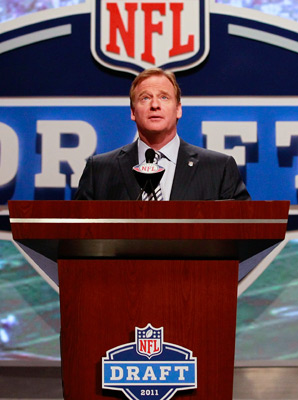
The commish

With the first overall pick in the 2013 craft beer draft, the Sous Brewer selects…

Okay, so all bad puns that may or may not exist within the title of this post aside (perhaps it’s a palindrome); the NFL draft is currently underway up in New York. It got me thinking, what if there was a craft beer draft? What if you had the number one overall pick?

It’s basically a question of “what is your favorite craft beer?” This of course is a nearly impossible question to answer, as there are so many wonderful craft beers out there to choose from. Even if you have a favorite style, which might help to limit the field somewhat, you’re still faced with the daunting task of selecting one out of a cast of thousands; a brew that you can build your evening around. Perhaps you select based on best available, or perhaps you select based on biggest need.

Then again, perhaps there is no wrong answer and this is all much ado about nothing.

So how do people decide? What are the factors that we use, whether they are conscious or subconscious, to choose between all of these delicious options we have before us?

Yeah, that's right, whatever beer I want, whenever I want
The first thing that comes to mind is availability, which technically is a limitation that is imposed on us beyond our control and not a determining factor that we use to help us choose. You could levy some degree of control over availability by only dining in restaurants with expansive beer menus, or choosing to shop at a specialty beer store over a grocery store, but even then, you’re still at the mercy of someone else’s understanding of what people like. In a perfect world, we could all have access to whatever beer we want at any given time because we would have the computer that Jean Luc Picard has in his stateroom that makes whatever food or drink you say into it. In a perfect world, I would be paid $100 per word for these ridiculous blog posts of mine.

An example of a distinguishing factor that we have a lot more control over is the “support your local brewer” mentality. If offering patronage to your native economy is something that gives you a sense of civic pride, this is a great way to select one beer over another. The locals are becoming more prevalent in most markets, but are often times smaller and more artisinal. For this reason, they crave your business, and by selecting them, you keep your money in the local economy. Everybody wins!

Brand loyalty from southeastern Pennsylvania
Somewhat related to the “local” motivator is the “brand loyalty” objective. Many people grew up on a particular brand of beer, or have a loved one who works for a specific company. Perhaps you prefer breweries from the city you were born in (which is kind of like extended-local brewer support). Whatever the reason for your loyalty, assuming your preferred brewery is available (there’s that pesky availability thing again), it can certainly help you whittle down the options.

You could also pick based on a brewery’s, or even on a beer’s, reputation. It’s very common for people to see a beer that they’re not sure about, but since it’s made by a brewery that they know makes great beer, they go for it, based on the reputation of the brewers. Similarly, perhaps they read beer blogs and other brewing publications, and notice that everyone is raving about a particular brew. Reputation is great way to separate the throngs of available options on the beer shelf.

Speaking of people raving about beer, another determining factor could be a recommendation. If you have friends like me in your life, you've probably got a list a mile long of “beers you have to try.” We beer people love to share our experiences (obviously), so if you’re looking for someone to make the choice for you, all you have to do is ask.

Most people will never see this
Untappd badge, awarded for drinking
2,500 unique beers
The final motivator that I will mention here is probably my favorite… the “ I've never had this beer before” consideration. This one speaks to the inner-adventurer in all of us. This is a style of beer selection that has been propped-up by the Untappd app on our smart phones and hand-held devices, which has created a legion of beer drinkers who are always on the lookout for the ever-elusive unique check-in. When you are trolling the aisles at the beer store looking specifically for beers you've never had before, particularly if you’re checking your Untappd account to make sure, you know you've become what I affectionately call a beer nerd. It’s okay to admit it.

There are, of course, many other motivating factors at play that lead a person to select one brew over another (IE: label art, mood, cleverness of the name, etc.). Whichever method you are using, as long as it helps you narrow down the potential beers, it works. As long as you don’t wind up in the hypothetical situation of having to select the first overall pick in a craft beer draft of sorts, in which case I don’t know what to tell you. Trade down?

Here’s to craft-brewed happiness… Cheers!

Saturday, April 20, 2013

Someone Put Fruit in My Beer!!!

Fruit in beer you say? Bad form Mr. Smee!

Blogger’s Note: I know it’s bad form to begin a blog post with administrivia, but we need to take a brief timeout before we even get started for this important announcement: Today marks the glorious and magnanimous return of the slowest growing blog sensation on these interwebs. After making you writhe in insecurity and misery for the past two weeks, I am back from my hiatus, full of energy, piss, and vinegar (full of something), and ready to bring craft-brewed enlightenment to your curious and thirsty souls. You don’t have to thank me. It’s the least I can do. Now, let’s get to it.

One of the most common complaints that I hear when enjoying craft beer with others is about fruit beers. For many people, the sweet and/or tart flavor profiles achieved through brewing with fruit are too much, and offensive. While I will admit that I have encountered fruit beers that were over the top and not as enjoyable as I would like, it is an absolute fallacy to say that all fruit beers are bad. You’ll find that like everything else in brewing, there are multitudes of factors that determine the end result, and by extension, whether said result is enjoyable or not.

Historically, brewing with fruit goes all the way back to the beginning. Brewers have always looked for ways to impart unique and enjoyable flavors into their beer, mainly because fermented malted barley by itself tastes incomplete. This is one of the reasons we use hops in beer today (not the only reason), as the bittering qualities of the hop flower add flavors that balance and pair well with the sweet malted barley. In the days before hops, brewers used a substance called gruit to flavor the beer. Gruit was quite literally whatever a brewer could find lying around that could be used to flavor beer, which often included fruit. In spite of what the Reinheitsgebot purists of Germany would profess, the reality is that fruit has been part of beer brewing since beer brewing became a thing.

You were so preoccupied with whether you could put fruit in
beer, you didn't stop to ask if you should.
Spin it forward to today and we find many different “fruit beers” available at your local craft beer retail establishment. Those who follow this blog know that I am meticulous about categorizing things, and spoiler alert – it’s about to happen again. Where is Ian Malcolm?

The first type of fruit beer that I am going to mention briefly and then dismiss completely is what I call “Commercial Fermented Fruit Brews” or CFFBs. CFFBs are your hard ciders and malted fruit juice drinks like Smirnoff Ice, Mike’s Hard Lemonade, Bacardi Whatever, etc. I have no time for these, even if they are properly made and independently owned, which would qualify them for craft status. Some people like them; I do not. If you must drink them, I recommend drinking the Angry Orchard series as I know for a fact it is privately owned and properly operated. Check the label when you drink these as they are often made by Budweiser, Miller, Coors, or one of the other miscreants out there.

The second category of fruit beers are those that live on the opposite side of the spectrum from CFFBs, in which the brewer is using fruit as a balancing equal part of a larger equation. We’ll call these “Fruit as a Balancing Adjunct Brew” or FBABs. A good example of this is a properly made Belgian witbier, in which the brewer adds citrus zest to the boil in order to impart a slight citrus note into the finished product. The fruit flavor will not be dominant in the end, and it isn't meant to be. It will simply be part of the whole flavor profile that the finished product has. Most Christmas Ales will fit this category too as they are usually brewed with fruit, but that fruit is only part of the greater compliment of flavors like cinnamon, ginger, and allspice.

Let's make a witbier! Look at that lovely citrus!

The third and final category that I am creating here today in this blog (you’re reading history here folks) is the one that lies in the middle – the category that encompasses all fruit beers where the brewer has chosen to celebrate a particular fruit and make it the star of the show. In fact, let’s call them “Fruit as the Star of the Show Brews” or FSSBs. These will be easy to spot, as they will probably include the name of the fruit being showcased in the title or style of the brew. This is the category where Belgian lambics live. This is also the category where most of your “they went too far” reactions are going to live, mainly because brewing with fruit is tricky.

Why is fruit brewing tricky you ask? It’s tricky because fruits react differently under boiling temperatures, time exposures and fermenting. Some fruit, like citrus, react favorably to the brewing process, maintaining their flavors and aromas, balancing well with bittering hops, and making the final product quite delightful. Then again, grapefruit is a citrus, and it probably wouldn't balance by itself, so there goes that theory. Contrarily, fruits like pumpkins lose the bulk of their flavor and aroma when brewing, which is why most pumpkin ales are heavily laced with pumpkin pie spices to ensure that the desired pumpkin flavor isn't lost.

Sam Calgione of Dogfish Head Craft Brewery prepping strawberries for his Tweason Ale.

Strawberries are another example of a fruit that loses most of its flavor and aroma while boiling. In fact, if you’re a chef or baker, you already know this as it applies to cooking as well as brewing. If you are setting out to make a strawberry beer, you’re already fighting an uphill battle. Many brewers do one of two things to ensure their strawberry beer tastes like strawberries. They either over strawberry it, particularly after the boil during fermentation, or they use strawberry extract which is mostly sugar either in place of the berries or to prop up the berries, again after the boil. The problem with extract is that it is very easy for the end result to taste like cough syrup.

This extract problem doesn't just apply to strawberries, but it seems that strawberries, due to their particular lack of cooperation when brewing, are the most glaring example of “when fruit beers go wrong.” Of course, the key to brewing is balance, so perhaps it’s not the extract that makes the beer unbearable, but rather that the extract is unbalanced. In standard brewing, you balance malt and hops – as in, if you’re setting out to make a hop bomb, you need to add more grain proportionate to how bitter your brew is getting. On the other hand, if you’re making a strong ale and are plussing up the malt to drive your ABV up, you need to add more hops in order to balance the sweetness of the grain.

Good advice right there.
The same type of principle applies to fruit brewing – which is why that last category (FSSBs) is so problematic. When your mission is to highlight a particular fruit, you’re already setting out to unbalance it because you want it to be the star of the show. The trick is to find a way to balance the flavor type without balancing the flavor itself. In other words, balance the sweetness of the cherries without overwhelming the cherry flavor. The pumpkin ale example is a good model of this, though as the pumpkin already has a subtle sweet flavor that is all but lost in the boil anyways, perhaps it is too easy. In this brewer’s opinion, it all comes back to hops. Just like overhopping to compensate for sweet malt, you overhop to compensate for sweet fruit. You could also go with spices to balance out the flavor, but that can be tricky too; if you use uncomplimentary spices, the whole thing could get weird quickly.

The best advice I can give for the drinker is to keep an open mind and try to appreciate and understand the beer you’re drinking for what it is. When you drink a fruit beer that is “not good,” try to dissect it and think about what went wrong. Perhaps now that you have a 101-level understanding of brewing with fruit, you can troubleshoot the brew and come up with ideas of how you would've done things differently. Then again, you could go to the other extreme and post a picture of yourself pouring it out on Untappd. Whatever you need to do.

Here’s to craft-brewed happiness… Cheers!

Saturday, March 30, 2013

Game of Thrones Beer is Coming

You win, or you die.

I make a lot of references to pop culture on this blog, or perhaps more accurately, nerd culture. Then again, many alleged experts of such things claim that nerd culture is the new pop culture. Beer culture and nerd culture go hand in hand, mostly because of the passion that underlies both subsets of our society. As a result of that passion, people become obsessed, and obsession leads to social pursuits such as this blog (shameless promotion alert), or really cool collaboration projects such as the one I’m about to reference.

Wait for it…

Pride of Cooperstown
HBO and Brewery Ommegang (Cooperstown, NY) have teamed-up to create beers that are inspired by the COMPLETELY AWESOME television-based nerd drama Game of Thrones. For those of you who watch GOT, I’m sure that the sheer overwhelmingness of what I just wrote has knocked you to the floor, so I’ll give you a moment to compose yourself and try to explain the show to non-watchers.

For those of you who aren't watching this show, Game of Thrones is based on the series of books by George R. R. Martins called A Song of Ice and Fire. It’s basically a medieval-like fantasy genre show that interweaves several plot lines: the first follows the members of several noble houses in a civil war for the Iron Throne of the Seven Kingdoms; the second covers the rising threat of the impending winter and the mythical creatures of the North; the third chronicles the attempts of the exiled last scion of the realm's deposed dynasty to reclaim the throne. In other words, it’s really cool.

And since season three debuts this Sunday night, what better time to tell all of you that aren't already aware that this new craft brew is coming… to a store near you. Here are a few words from the brewers:

Brewery Ommegang and HBO are partnering on a series of beers in support of the critically-acclaimed drama Game of Thrones. Launching in tandem with the season three debut, Iron Throne is the inaugural beer in the series.

Delicious looking; cool label art too
Iron Throne is a blonde ale at 6.5% ABV and brewed with a robust amount of pils, honey malt, aroma malts and red wheat. Gentle hopping includes Styrian Golding and Hallertau Spalter Select, appropriately noble hops. Spiced with grains of paradise and lemon peel. Hue is a slightly hazy golden amber. Head is full and fluffy. Finish is crisp, backed by a touch of spice and hops. Aroma is a bit grassy with a hint of lemon fruitiness from the lemon peel. Taste is lightly malty, rounded out by honey malt sweetness.

Available in limited quantities in 750ml bottles and 1/6 BBL kegs starting in late March 2013.

This is pretty cool stuff. Generally speaking, when like-passioned people get together to collaborate on a project that transcends the divide between their crafts, greatness happens. Ommegang has been brewing Belgian-inspired beer in the American craft beer scene for years, and their track record is flawless. From their Hennepin Saison to their Three Philosophers Belgian Quadruple, their attention to detail and passion for their craft is evident in every pint, and I expect that same attitude to be manifested in Iron Throne.

The Ommegang Brewery
As an aside, if you’re looking for a weekend getaway idea, Ommegang offers an excursion where you arrive on Friday night, stay at a bed and breakfast in Cooperstown, spend the day Saturday taking in the sites (Baseball Hall of Fame?), and then attend a beer dinner at the brewery Saturday night, complete with brewery tour. Of course, you’ll retire to the B&B afterwards and leave Sunday after breakfast. Sounds like a pretty cool deal to me.

And no, I do not receive any kind of compensation from Ommegang (or HBO for that matter) for shamelessly pushing their products… though I am willing to listen if they are reading this blog…

Now, if you wanted to achieve ultimate rock star status, you would've attended the Ommegang beer weekend this weekend, drank some Iron Throne at the brewery itself, brought a growler of it home with you and enjoyed said beer from said growler while tuning into the debut episode of season three, Sunday night at 9:00 eastern on HBO. Of course, by now, you've already missed the boat on this (as have I for that matter… blast!) but it would've been pretty cool.

Again, watch Game of Thrones, drink Ommegang Iron Throne Blonde Ale, and HBO/Ommegang/George R.R. Martins, if you’re reading this, I am willing to accept comps. Just saying.


Here’s to craft-brewed happiness… Cheers!

Saturday, March 23, 2013

Craft Madness


In an effort to continue the ongoing parallel between beer and sports, as though that parallel needed my help to sustain, I am writing today about beer brackets. In other words, this newly over-hyped and sensationalized notion that you can take a bracket, similar to the one used in the NCAA basketball March Madness tournament, populate it with beer instead of college teams, and pit these beers against each other in a seeded, single-elimination, winner-take-all, popularity contest.

Rick Grimes asked you nicely to vote for The Walking Dead
These days, in a world where nobody has any good ideas anymore, but rather recycles good ideas that already exist, and where social media has made it impossible to a) keep a good idea novel and b) avoid the cancerous over-propagation of “played-out” former good ideas to death, March Madness-style brackets exist for literally everything. Yesterday, I was given a link to a “television shows” bracket that pitted The Walking Dead against Sons of Anarchy and Dr. Who against Once Upon A Time, I’m assuming with the intent to determine which show is best, as if determining that sort of thing was possible by collecting votes for one show over another. I've also seen brackets for books, star wars characters, and not surprisingly, beer.

Newspapers, or more accurately news websites, in an effort to remain relevant in this ever changing and hostile to traditional media outlets world of ours, are usually at the center of these bracket challenges. In the case of the beer brackets, there are more of these available every year, always coinciding with the NCAA basketball tournament, and this year, it seems as though every news outlet in existence, from local to national, has a beer tournament.

Truth be told, I don’t mind the local ones. Craft beer is still an emerging industry that posts gains every year in market share, and the beer itself is increasing in popularity as well. At the local level, there is a lot of pride to be found between brewers and the local population, and by extension, ratings to be had by the local media playing off of that pride. Local beer brackets also tend to encompass a good swath of the local product, scooping up multiple offerings of like style from each of the local breweries and giving a good indicator of which is best, or at least, which is the most liked or most popular.

They want you to believe this is the formula for populating
beer brackets, but it's a little less sophisticated than this
When you get to the national news outlets and the macro-crafty beer brackets, things tend to get a bit preposterous. First of all, there are 2,416 breweries in the United States as of March 2013 - 2,360 of which are craft breweries. Typically, a March Madness bracket consists of 32 or 64 spots, so advanced mathematics tells us that a newsroom flunky or blogger (I hate them) that is tasked with building a national beer bracket is going to have to do some trimming. Conventional wisdom says that, in order to appeal to national readers, you have to select beers that people all over the country have heard of or they won’t care. So now you have a bracket filled with Sierra Nevada, Dogfish Head, New Belgium, and most likely (because these aren't beer people creating these things and they don’t know any better) crafty big beers like Shock Top, Blue Moon, and Goose Island. Of course, if AB/InBev/SAB/Miller/Coors is a major sponsor of the newspaper/website, they may even insist on throwing in some Budweiser Black Cap or Redd’s Apple Ale, or some other disgusting shame of a beer.

My point is, it’s impossible for properly made, delicious brews without the mass distribution and add campaigns to get any consideration for these macro-tournaments. They might be good enough for the unenlightened plebes, but those who take pride in what they are drinking and want to be part of something more know better, and deserve better.

So what is the solution? How can a national, all-encompassing, beer bracket be made better?

Pay attention flunkies
This is for the newsroom flunkies and sponsored bloggers who I know are reading my tireless drivel. The only way I see that you can make this work is to fully embrace the NCAA model. The NCAA tournament isn't randomly populated right before the madness starts by teams everyone has heard of. It is cobbled together with teams who won their conference, or are nationally ranked, or have a good RPI (Ratings Percentage Index – quantity that ranks teams based on wins/losses and strength of schedule). The way you do this is to partner with the local papers and affiliate TV stations and let each region decide who it’s best beers are, and then divide the brackets into regions.  Don’t worry about like styles (which is a common concern in beer brackets) because since winners are determined by popular vote in these things, it is a popularity contest and comparing apples to bananas won’t matter.

My advice for those of us who are consumers (or not affiliated to beer brackets, but rather the target demographic of said brackets) is to ignore the national ones. They are quite literally watered down to the lowest common denominator, to the point of being a colossal waste of time. The local ones, on the other hand, can be fun, and particularly if they are done well, can be a good way to socially enjoy craft beer. If you’re a brewer, and for some reason you’re reading this blog, please take the March Madness beer brackets away from the media people. Bless their hearts, nobody tries harder, but they need our help. My vision, if anyone cares to know it, is that the local breweries get together and build a 64 beer bracket with their local brews. Use the local media to market the idea and spread the word, and then let the people judge in a flight-based, beer tasting event that is hosted at the breweries (or a neutral site), while watching March Madness basketball on TV. Depending on how many breweries are in the local market, you can rotate which brewery hosts the tasting per round of the tournament. Tally the votes. Winner takes all. Great for PR, and great for local pride (and thirsty beer drinkers too).

Shoo... I wouldn't miss the semis...
BTW – For those of you who are in the DC metro area and are following the Washington Post’s 2013 Beer Madness tournament, my Final Four consists of Wild Wolf Brewing Company’s Local Wolf India Pale Lager from Nellysford, VA, DC Brau’s The Citizen Belgian-style IPA from Washington DC, Starr Hill Brewing Company’s Northern Lights IPA from Crozette, VA, and Dominion Brewing Company’s Oak Barrel Stout from Dover, DE. In the semis, I have The Citizen beating Local Wolf and Northern Lights beating Oak Barrel Stout. In the finals, it is Starr Hill’s Northern Lights edging out DC Brau’s The Citizen. Then again, it’s just a popularity contest, so what do I know?

Here’s to craft-brewed happiness… Cheers!

Saturday, March 16, 2013

Sláinte!


I once heard it said that God invented beer so that the Irish wouldn't take over the world. While this might not be entirely accurate, there is no denying that over the years, Ireland has become associated with beer. And since tomorrow is St. Patrick’s Day (another proper noun that is virtually synonymous with beer), it seems only too obvious a blog topic for this rainy Saturday morning in March. I like to pick the low hanging fruit first folks.

Ireland is known for its beer for a reason. The nation has a long and proud brewing tradition and is home to literally thousands of pubs serving locally made Irish beer. In fact, over half of the total alcohol consumed in Ireland is beer. Today, the Irish produce over 8.5 million hectoliters of beer annually, which ranks them fourth in European beer production behind Czech Republic, Germany, and Austria. Surprisingly, stout ale only accounts for 34% of that total. The most popular and most often brewed beer in Ireland is lager, which accounts for 60% of the total annual production. Ales other than stout make up about 6%.

Beer and Ireland go way back. Back in the day, which coincidentally was a Wednesday, the Irish brewed ale without the use of hops as they were not native to the country. In the 1700s, the Irish began importing English hop varieties and brewing their own versions of English styles, but still most of the beer consumed in Ireland was imported from England and Scotland.

St. James Gate at the Guinness Brewery in Dublin
In the middle of the eighteenth century, the Irish parliament used taxation to encourage brewing beer at the expense of distilling, as they felt that beer was less harmful than whiskey. It was around that time when Arthur Guinness opened a brewery in Dublin adjacent to the Liffey River, and Irish brewing took off. After some years of experimentation with English porter recipes and local Irish ingredients, he created the Guinness stout that is so popular and well known around the world today.

The Irish brewing industry prospered and other brewers shortly joined in and began creating some of the other popular varieties of beer still produced in Ireland today, including Murphy’s and Beamish stout, brewed in County Cork. Murphy’s and Beamish also brewed lager-style beers and red ales that were equally popular in Ireland as their stout was. Smithwick’s brewery, located in Kilkenny, also produced an amber ale that is sometimes sold outside of Ireland under the name “Kilkenny.”

By the early nineteenth century, there were more than 200 breweries in Ireland, with more than 50 of them in Dublin alone. Ireland’s production increased so much that soon, they were exporting more beer to England than they were importing from them. Just like in America, as industrialization took over, many of the Irish breweries consolidated and closed, leaving only a few breweries operating by the middle of the twentieth century.

The Hilden Brewery in Lisburn
Also like in America, the craft beer movement of the 1990s took hold in Ireland and several small-batch breweries and brewpubs began opening across the country, saving the Irish beer industry. Ireland’s oldest independent brewery, the Hilden Brewery in Lisburn, was founded in 1981 and still operates today. Other pioneers of Irish craft brewing that still operate include the Franciscan Well Brewpub in Cork, Dublin’s Porterhouse, and the Carlow Brewing Company from Country Carlow, makers of the O’Hara’s range of craft beer that we can buy here in the States. There are also some newer craft breweries, such as the Beoir Chorca Dhuibhne Brewery in County Kerry, Hooker Brewery in Roscommon, Dungarvan Brewing Company, Clanconnel Brewery, Trouble Brewing, Metalman Brewing, The Dingle Brewing Company in County Kerry, Bo Bristle (formerly Breweyed) and Eight Degrees Brewing. These breweries make it possible for visitors to Ireland today to taste and enjoy many types of Irish beers unavailable anyplace else.

So how does any of this apply to you? Well, as I mentioned earlier, tomorrow is St. Patrick’s Day, a holiday in which millions of Americans, some of Irish decent but most with no connection to Ireland at all, will take to the pubs to listen to Irish-inspired punk rock music and drink Guinness, Harp, or some American industrial fizzy yellow corn-based swill beer with green food coloring in it. If you’re like I am, that last sentence is a depressing, albeit fairly accurate, description of the holiday. Fortunately, there is opportunity here.

The Chicago River on St. Patrick's Day - the source of
the green beer served in bars across the country
First of all, beer that is consumed on St. Patrick’s Day should be Irish, or of an Irish style. Green food coloring does NOT make a beer Irish, and does not count as an Irish style. Therefore, leave the American Light Pilsner Lagers alone!!! Also, while I am on that subject, George Killian does not make Killian’s Irish Red anymore… Pete Coors does. So leave the Killian’s Irish Red alone too.

It is perfectly acceptable to drink beer made by Guinness, Harp, Smithwicks, Murphey’s, and Beamish, as they are all Irish, but as I always do, I recommend you venture out a little bit and try to find some Irish craft beer. I know for a fact that grocery stores all over the country carry O’Hara’s labels and the few that’s I've had are pretty good. If you go to a specialty beer store, you might be able to find some other Irish craft beers too.

The other option is to drink American craft beer versions of Irish styles, such as Irish dry stouts and red ales. For dry stouts, I recommend North Coast Brewing Company’s Old #38 Stout from Fort Bragg, CA, Victory Brewing Company’s Donnybrook Stout from Downingtown, PA, Starr Hill Brewery’s Dark Starr Stout from Crozet, VA, or Three Floyds Brewing Company’s Black Sun Stout from Munster, IN. For Irish red ales, I recommend Great Lakes Brewing Company’s Conway’s Irish Red from Cleveland, OH, Harpoon Brewery’s Celtic Ale from Boston, MA, Flying Dog Brewery’s Lucky S.O.B. from Frederick, MD, or Matt Brewing Company’s Saranac Irish Red Ale from Utica, NY.

The Dropkick Murphys - Pride of Boston, MA
So hopefully I've armed you with enough general knowledge about Irish beer to enjoy your St. Patrick’s Day reveling. Whether you’re actually Irish, of Irish ancestry, or merely pretending, don’t be that guy who shows up at the Irish pub with his green shirt, shamrock button and green food coloring in his Budweiser, quoting lines from The Boondock Saints and claiming that the Dropkick Murphys are the best band ever. Try a little harder. Take pride in your reveling. And please drink proper beer.

Here’s to craft-brewed happiness… Sláinte!