Saturday, September 13, 2014

The (Other) Beers of Fall

Clearly a picture of me drinking a beer.
Let’s conduct a written Rorschach test: I will give you a pair of words, and I want you to tell me the first thing that you think of.

1) Autumn
2) Beer

You thought of pumpkin ale, didn't you? I would be willing to bet the total value of this bloggity blog (don’t get excited… it’s not that much) that 75% of people who took this quiz would respond with pumpkin ale, and the other 25% with Oktoberfest beer. Don’t worry, I’m not criticizing… I would too.

We have been convinced by the beer industry marketeers and the court of public opinion that the harvest seasonal beers listed above are the end-all, be-all of autumn beer. We look forward all year long to August (apparently) when these tasty fall brews will appear on a grocery store shelf near us. In fact, you have to try especially hard to think of an autumn beer other than pumpkins or Oktoberfests… or you just need to read this blog. This post is dedicated to the hard-working and oft-under-celebrated styles of delicious craft beer that go unnoticed during the tumultuous fall months. If it’s pumpkins you want, I have already written twice on the miracle of pumpkin ale this year (click here and here). If you are chomping at the bit to learn about Oktoberfest brews, that happens next week (spoiler alert). But today, we’re all about the other ones.

And no, this list is not comprehensive, so all the trolls out there can relax a little bit. Frackin’ internet trolls.

IPA

Ha ha! Bet you didn't see that coming, or maybe you did. I’m not just throwing a nod to my fellow hop heads out there who drink IPAs all year round, and this isn’t an attempt to convince you that IPA is a universal style that is always appreciated, even though it is exactly that. No, I’m referring to the spectacular IPA sub-styles that are perfectly aligned with fall – Rye IPA and Red IPA.

Ruthless, but delicious!
The two are very similar: Basically, they are over hopped versions of a different style of beer that make them IPA-like in their flavor and bitterness. The Rye IPA contains at least 20% rye malt to give it a darker appearance and spicy flavor, which is perfectly balanced by generous hop additions. The Red IPA is an over-hopped red ale, which gives it a red or amber complexion, as opposed to a typical IPA which has a more pale look to it. They often contain a dash of rye malt as well. The Red is typically maltier than the standard IPA.

Good examples of these IPAs you should look for are Sierra Nevada’s Flipside Red IPA and Ruthless Rye, Green Flash’s Hop Head Red, Saranac Red IPA, Founders’ Red’s Rye IPA, Firestone Walker’s Wooky Jack, Otter Creek’s Kind Ryed IPA and Bear Republic’s Red Rocket Ale and Hop Rod Rye. Certainly not a complete list by any means, but it should get you started and fully engaged in these two IPA styles.

Brown Ale

A personal favorite.
Brown ale is today what porter was ten years ago… in America at least. It is becoming the lost style of beer. In my opinion, a revival is long overdue because brown ales are extremely diverse and can be quite delicious. They are typically malt-forward ales that concentrate their effort on sweet, malty goodness as opposed to bitterness. Many brewers even experiment with different malt combinations in order to gain chocolate, caramel and nutty flavors. Obviously the darker color and flavor combinations listed above are seamlessly connected to fall harvest themes.

Three of the best examples of this style here in the States are Cigar City’s Maduro Brown, Avery Brewing’s Ellie’s Brown Ale and Abita Brewing’s Turbodog. Others that are definitely worth your time are Troegs Rugged Trail Nut Brown Ale, Smuttynose’s Old Brown Dog Ale, , Rogue’s Hazelnut Brown Ale, Dogfish Head’s India Brown Ale, Sierra Nevada’s Tumbler, Schlafly’s American Brown Ale and Bell’s Best Brown.

Hoppy and terrific.
Amber Ale

Sticking with our theme of malt-forward beer and ties to the fall, I give you the amber ale. Technically, there is no reason why this can’t be an all-year round style, and for most people, it is exactly that. Which is why you should keep drinking them in the fall. Obviously.

Good ambers to look for are Anderson Valley’s Boont Amber Ale, Rogue’s American Amber Ale, Troegs Hop Back Ale and Bell’s Amber Ale. Of course, you could always stick to old reliable – New Belgium’s Fat Tire.

Schwarzbier

This one is awesome! 
May the Schwarz be with you, all through the autumn season. Many will tell you that schwarzbiers are for winter, and that marzenbiers and other Munich/Vienna lagers are the prototypical fall beer, but I already told you we will start looking at Oktoberfesting when the festival begins next week (SPOILER ALERT!!!). If the black color is all it takes to relate a beer to winter, then fine… make schwarzbier a winter style. For me, I associate strong robust flavor to winter, not black color… so schwarzbiers do not cut it. They are typically easy drinking, light, uplifting lagers that are hoppy bitter rather than malty bitter – and jet black in color. It’s kind of an enigma as far as style-to-seasonal associations are concerned… so I’m putting it in the fall. Deal with it.

Devil’s Backbone’s Schwartz Bier, The Duck-Rabbit Swarzbier, Saranac’s Black Forest and Schlafly’s Black Lager are all very excellent examples of this style.

Belgian Dark Ale

The final suggestion I will make to you today is to drink Belgian dark ales. Seriously, do it now. They are wide ranging and delicious, bold flavored and can be menacing in alcohol levels. They are usually amber to deep brown and garnet in color with white, rocky head. Typically, they are yeasty, spiced, floral and malty smelling and have a dry, spiced, sweet and malty flavor.
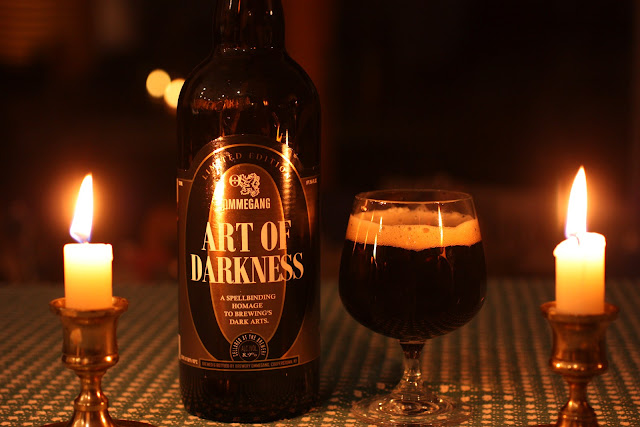
Dark and mysterious.

Great beers to look for in this style are New Belgium’s 1554, Ommegang’s Art of Darkness, Dogfish Head’s Raison D’Extra, Avery’s The Reverend and Great Divide’s Grand Cru. Seriously, you’re going to love spending autumn in Belgium.

Hopefully, you see that you don’t have to spend the fall in pumpkin and Oktoberfest lager territory… not that there’s anything wrong with that. Options people… you have them. Variety is the spice of like. Beers, beers everywhere… pour yourself a drink. If ifs and buts were candy and nuts… what was I talking about?

Here’s to craft-brewed happiness… Cheers!

Saturday, September 6, 2014

So You Want to Brew a Pumpkin Ale

Not exactly how it works
They are everywhere, from the grocery store shelves to the taps in your favorite local brewery’s tap room. Everyone’s got pumpkin beer on the brain! I’m sure by now, you've began scouring your community, looking for as many different pumpkin ales as you can get your hands on. You may have even decided you’re going to try your hand at making your own. After all, a wiser fella than myself once said, “there is no nobler cause in life than to make your own beer.”

… and 90% of all internet quotes are completely made up. Just like internet statistics.

Anywho, if brewing your very own pumpkin beer for the holiday season is on your list of things to do, I've got a few suggestions for you. Obviously, these thoughts are my own and not intended to represent any kind of sanctioned industry standards. They are also intended for those home brewers who have graduated to all grain brewing. If you’re an extract or a partial mash guy, read on for general situational awareness… but obviously, these ideas will have to be modified before being applicable for your use.

See them standing, in a row...

The first thing you must decide is whether you will use real pumpkins or not. Many if not most pumpkin ales are not made with real pumpkins – they use canned pumpkin like you would find at your grocery store. Of course, I've also seen it done where pumpkin ales are made with just pumpkin spices… but that sort of thing is generally regarded as loserish.

Soon, you will all be turned into
delicious pumpkin beer...
The reason why many brewers don’t use real pumpkins is because it’s not worth it. Pumpkins are quite irritating to work with, and don’t make or break the beer. First of all, they have to be in season. Not to mention that you have to roast the pumpkins in order to get anything out of them, and then, they gum up the mash and make sparging a mess when you are mashing them in. Everything you need from a pumpkin in order to make pumpkin ale can be gained from canned pumpkin. Plus, since canned pumpkin is concentrated, you need less of it than you would real pumpkins. But hey, it’s your show.

The correct way to add pumpkin is to mash it. Some people pre-boil the canned pumpkin before mashing, but that’s not necessary. Add the pumpkin to the rest of your grain in the mash tun and mash for full time. The color of your eventual beer will not come from the pumpkin… it will come from the barley, so design your base malt accordingly. I recommend a pale ale or amber lager for a typical pumpkin ale recipe… something in the pale to amber/red range. If you’re brewing a pumpkin porter or pumpkin saison (I just saw one of those the other day… really interesting), you’ll obviously need to adjust your grain bill accordingly.

You’re going to have to rake the top of your grain bed when you start sparging because the pumpkin will form a gelatinous layer on top that the sparge water cannot penetrate. Also, pumpkin gets extremely sticky throughout and is a pain to run off. Adding rice hulls will help a little bit, but you should expect 2-3 times as much time to lauter. I warned you pumpkin can be a pain in the butt.

You can also add pumpkin to the boil instead of the mush tun which is much easier – but you’ll miss out on some of the flavor, body and fermentables you would've gotten by mashing it.

Deliciousness
Once you have successfully lautered out the necessary volume of wort, the rest is pretty straight forward. Hop additions should be early and modest, aiming for a lower bitterness of below 20 IBU, just enough to balance the sweetness from the malt. Mt Hood and Hallertau hops are good varieties to use. You are not hopping for flavor or aroma as those departments will be addressed later.

Towards the end of your boil, like in the 5 minute range or so, you’re going to add spices. This is where the bulk of your flavor and aroma will come from, which is why you add it so late. The spices you add will vary depending on what exactly you are going for, but typically, they are some combination of cinnamon, nutmeg, ginger, allspice and cloves. The total amount of spices for a 5 gallon batch should be around .5 oz (as in not very much). It’s important not to over spice or you’ll be left with a perfumy disaster. You could also put your spices into the fermenter, sort of like dry-hopping them.

If you want to get fancy, or you are trying to clone Southern Tier’s Pumking, throw some vanilla beans into the boil to simulate the whip cream dollop on your pumpkin pie.

The yeast is up to you as well, depending on what you want your finished product to be. If you want your beer to be clear and crisp, use a German lager yeast and ferment cold. If you want more body and a bolder flavor profile, American ale yeast is the way to go.

A typical 7-10 day primary/secondary fermentation followed by 2-3 weeks of conditioning will be sufficient to finish this beer off. Expect the total soup to nuts to be 5 weeks or so.

Everybody loves the great pumpkin!

After that, there’s nothing left to do but give your beer a name and enjoy on a cool autumn evening with friends. Everyone loves pumpkin ales, and if you make one, everyone will love you too. Now this blog is giving out life lessons. Free of charge.

Here’s to craft-brewed happiness… Cheers!

Saturday, August 30, 2014

Gazing Into My Crystal Ball

You see this book? This book tells the future.
As we wrap up what can only be described as a very successful Virginia Craft Beer Month, I’m going to take this last Saturday in August as an opportunity to put on my soothsayer hat and prognosticate a little bit. This is my estimation of the current craft beer industry in Virginia, as well as what I see in the future of Virginia craft beer.

Bear in mind these are only my predictions and do not represent any inside knowledge. I also do not have any divining powers so I've not been given an advantage to be doing these sorts of things. I one day hope to find the sports almanac from Back to the Future 2 so I can make millions betting on current sports events, but even if I had already found it, it would not help us here.

I think it’s safe to say that craft beer is officially booming in Virginia. Nearly 100% growth over the last three years is certainly exciting; if not a sign that something serious is happening here. Many in the industry forecast that Virginia’s brewery total will double again in the next two years.  We may not be Colorado or California, but we’re absolutely on the rise, and our future is brighter than theirs.

I say that because Virginia, particularly Northern Virginia, is also going through a population increase, mostly due to increased employment opportunities, and more people equals more beer drinkers, equals the need for more breweries.


People like to talk about saturation points and ceilings, and they point to the national brewery total being higher than it ever has been in America (over 3,000) as the reason. But that comparison is not as solid as you might think. The volume of beer produced is holding steady as the number of breweries increases, which means that new smaller breweries are taking away market share from existing larger breweries. We see this in the fact that the overall beer industry is shrinking, and AB-InBev and SABMillerCoors are reporting losses, while craft breweries are reporting roughly 10% growth annually.

It’s also important to point out that the national brewery totals of yesteryear, which we assume were based on demand at the time, were centered on a much smaller population than we have now. This steers us back to my point from a few paragraphs ago – as Virginia’s population continues to grow, the need for more local brew increases too.

I love that taste!
But why does it have to be local brew?

Technically, it doesn't. Larger craft breweries have dominated the national landscape for decades, shipping their delicious craft beer to the four corners of the States and filling a void in areas where no craft beer was being made. Those times have changed, in that virtually every metropolitan area has multiple local craft brewers to choose from and that void no longer exists. It doesn't stop the Sierra Nevadas and Sam Adams of the world from selling their beer in far off markets, but it does shrink those far off markets due to lack of available shelf space and tap handles.

Not to mention that this new generation of craft beer drinkers tends to gravitate toward products that are made locally and with healthier ingredients, like organic and natural alternatives. As more and more local breweries open, the local market strengthens and the idea to drink local brew solidifies in the mind of the consumer. Call it civic pride, or maybe it’s simply that people like to see and hang out with the brewers that make their beer.

The local craft brewery tap room is becoming a very popular place to hang out, both for people who live and work in the area, as well as being a destination for craft-beer obsessed people like myself. Customers like the atmosphere, the beer, the events that are held, the food trucks that pull up and sell their wares, but most of all, they like to drink beer with the people that made the beer while sitting in the brewery itself.

Delicious Virginia beer on draught
The local brewers are doing what the national-level craft brewers did 30 years ago – building a strong connection to their local communities and selling them beer. Only now, local brewers are able to grow faster due to an established marketplace and social media fueling the word of mouth advertising that drives craft beer.

And the local grocery stores and restaurants are getting the point too… and providing more shelf space and tap handles to the local craft beer scene, because it sells. If anything, the surge in local Virginia breweries and limited (although expanding) shelf space and tap handles will spell more trouble for national brewers than it will for the local guys.

But eventually, and it might happen soon, the limited available shelf space and tap handles will cause demand for the local craft beer that fills those points of sale to dwindle. Most of the local breweries that have opened in the last few years in Virginia have been the smallish to medium-sized production lines that focus their efforts on selling kegs to local bars/restaurants, with a few larger operations that also sell packaged beer to grocery stores and other retails points of sale. The reality is that while that level of production and distribution allows a brewer to sell more, and make more money, it also takes a lot of control away from the producer of the beer, and places it in the hands of distributors, wholesalers and retailers. I predict that the number of new brewing operations that utilize this surging brewery business model will start to decrease in Virginia during the next year or so, and be replaced by…

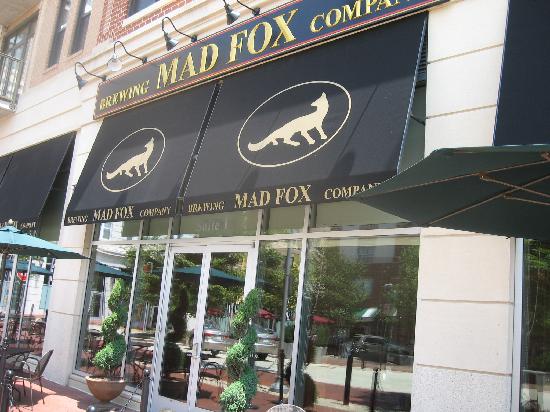
Mad Fox is one of only a few brewpubs in Northern VA
Brewpubs. The brewpub is an under served business model in certain parts of Virginia, particularly Northern Virginia. Brewpubs are a great way to make and sell beer because you control the point of sale almost exclusively. It also attracts beer people and non-beer people alike because of the food, so you have a broader audience to sell to – more customers equal more money.

But brewpubs also cost a fortune to open and run, which is why most local small business brewers avoid them.

But the local craft beer scene in Virginia has seen so much success over an extended period of time that before too much longer, the big-time investors are going to take interest. It’s already beginning to happen. These folks are going to see craft beer as an investment that they can make a fortune off of, and they will line up out the door to give brewers money to start one of these money makers. Obviously, that kind of relationship with boards of investors and ownership groups will be a colossal headache, but if the food is good and the location is right, the beer will sell… we've already seen that local people like their local beer, and they need a place to eat too. My suspicion is that a healthy chunk of the future breweries in Virginia will be brewpubs who don’t have to sell their beer to third parties… they can sell directly to the consumer on a large scale. Look for these guys to start popping up in the next two to five years.

Crooked Run is a nano-brewery in Leesburg
Of course, a smaller and easier to open operation that allows the brewer to control their own point of sale is the nano-brewery… another business model that is becoming quite popular. A nano functions more like a local pub that makes its own beer on site. You could also characterize it as a brewery tap room – selling beer by pints, flights and growlers but not making enough beer to sell to third party points of sale. You can’t make as much money doing it this way, but it costs less money too and affords a brewer to make delicious beer without the hassle that comes with larger operations. Look for nano-breweries to make up the bulk of the next wave of Virginia breweries… probably in the next two years.

And lastly, we have to consider the farm-brewery, which is now completely legal in the commonwealth. A farm-brewery functions exactly like a vineyard/winery in that it is usually off the beaten trail and a destination for most patrons. Farm-breweries tend to make smaller quantities of beer and have fewer customers, but they focus their attention on being an event location for wedding parties, class reunions, etc, complete with nice outdoor areas, live music, catered food, friendly folks and sometimes great views. They usually package some of their beer or sell kegs to retailers as well. There aren't many of these currently in existence, but it’s another business model I see gaining some steam in the next few years in Virginia.

Overall, the future of Virginia craft beer is bright… brighter than most states. Our laws are favorable, our customers are thirsty and our marketplace has never been more exciting. I predict that as Virginia’s breweries double in size over the next two to five years, we should expect to see some different business models catch up to the existing and ever-popular production brewery model, with a focus on local community-centered operations that bring more delicious Virginia beer to more customers!

Here’s to craft-brewed happiness… Cheers!

Saturday, August 23, 2014

A Free Lesson on Grand Openings

Pride of Fauquier County, VA
It’s still August, which means Virginia Craft Beer Month is still going strong! There have been all kinds of brewery events going on this month, and I've been fortunate to make it to a few of them. Last Saturday, for example, I had the pleasure of attending the grand opening of Old Bust Head Brewing Company’s tap room in Fauquier County, Virginia.

Old Bust Head opened their brewery doors back in early 2014 (February if I remember correctly) and began creating their core flight of brews – an English Pale Ale, an IPA, a Chestnut Porter and a Czech Pilsner. They slowly started distributing this deliciousness to local stores and bars, all-the-while hosting visitors in their 30 barrel brew house. Bust Head quickly became known for quality brews, friendly people and a laid-back atmosphere.

Then last weekend happened. Old Bust Head spent the last several months constructing the other half of their facility… the tap room… and on Friday, August 15th, they unleashed it upon the world. Their tap room, much like their entire operation, is quite impressive. The bar area has 48 taps (some of them nitro) and ample chalkboard space for announcements and flight information. Next to that are a large merchandise sales area and restrooms, as well as a door that leads out to the loading docks where food trucks set up their operations. There is also a stage area inside the tap room, a separate room for parties, loads of tables and seating options, and an outdoor biergarten area. Talk about a huge operation!

The place was jumping!

We went to visit them on the second day of what was their grand opening weekend and the place was jumping. People standing and sitting elbow to elbow, beers being poured continuously, band playing, barbecue served… an absolute mad house! They used an aggressive social media, word of mouth and advertising campaign and it paid off. By the time I left, the line for the bar was out the door and into the parking lot! In other words, OBH put on a demonstration of how to do a grand opening correctly.

Vixen, Shorthorn, Gold Cup and Chukker
As for the beer, which is the real star of the show, Old Bust Head was serving seven of their creations, including a new offering. They had their Old Bust Head English Pale Ale, Wildcat IPA, Chukker Pilsner, Chinquapin Chestnut Porter, Vixen Irish Red, Shorthorn American Pale Ale and Gold Cup Russian Imperial Stout.  The Gold Cup was brand new and it was delicious! Jet black with a full-bodied sweet malt-forward flavor, this Russian Imperial Stout is quite something and I highly recommend it. Particularly when they pour it through a nitrogen tap!!! The Shorthorn Pale Ale was also quite good, and the Chukker continues to be one of my favorite pilsners that I've ever had.

Of course, no trip to a brewery in Old Bust Head’s neck of the woods would be complete without barbecue from Bad to the Bone, who naturally had their food truck parked in the loading dock area… always delicious!

I’m already planning my next trip to Old Bust Head… perhaps when it calms down a little bit. I love a good crowd, but I also enjoy the laid-back atmosphere where I can have an opportunity to sit down and over-analyze beers… because that’s what I do.

OBH Team doing work.

I highly recommend you pay them a visit too if you haven’t already done so. Great brews, friendly folks, and now with a bright shiny new tap room!

Here’s to craft-brewed happiness… Cheers!

Saturday, August 16, 2014

Bikes and Brews

Let me be honest right off the bat – I am not a bicycle enthusiast. I rode my bike as a kid, but over time, I have lost my knack for it. They say that things you used to do but haven’t done in a while will come back naturally like getting back on a bike… in my case that means these things would come back to me slowly and painfully, and probably cause bruises and emotional strife.

But enough about my bike riding issues…. what does this have to do with beer?

The front doors, for us non-bikers

A month or so ago, a new brewery opened in Ashburn, Virginia called Old Ox Brewery. Old Ox is a production brewery located on a bike trail called the Washington and Old Dominion (W&OD) Trail. I mean that literally… the brewery is ON the bike trail (between mile marker 25 and 25.5), as in the trail is 20 feet away from the door to the brewery! This gives Old Ox a close relationship with bike riders that they have parleyed into a pretty cool and laid-back craft beer drinking atmosphere.

I wandered up to Ashburn last Saturday afternoon to visit and drink some beers. The brewery is physically located in an industrial park that has more of a commercial feel than a heavy industry vibe. It’s a quiet part of town that gels well with the overall mood of the brewery.

The tap room is large and inviting with a big bar area, TVs on the walls and views of the brew house in the next room. After chatting with their friendly staff at the bar, I ordered my flight of their four brews and took a seat at one of the tables near the bay door (which happens to open to the W&OD trail) and watched the bikers coming off the trail park their bikes and come on in for a pint. Again, I’m not a biker, but I found this phenomenon fascinating.

The bay door, for the bikers, and air-flow purposes

Another really cool aspect of Old Ox is the food situation. They don’t make food there (although they do have bags of chips and some sodas) but they do have a partnership with Jennifer’s Pastries, which is another small business located in the same complex. Jennifer’s menu is on every table in Old Ox, and all you have to do is call her… she delivers your food to your table in the tap room. They have excellent sandwiches and pizza. How cool is that?

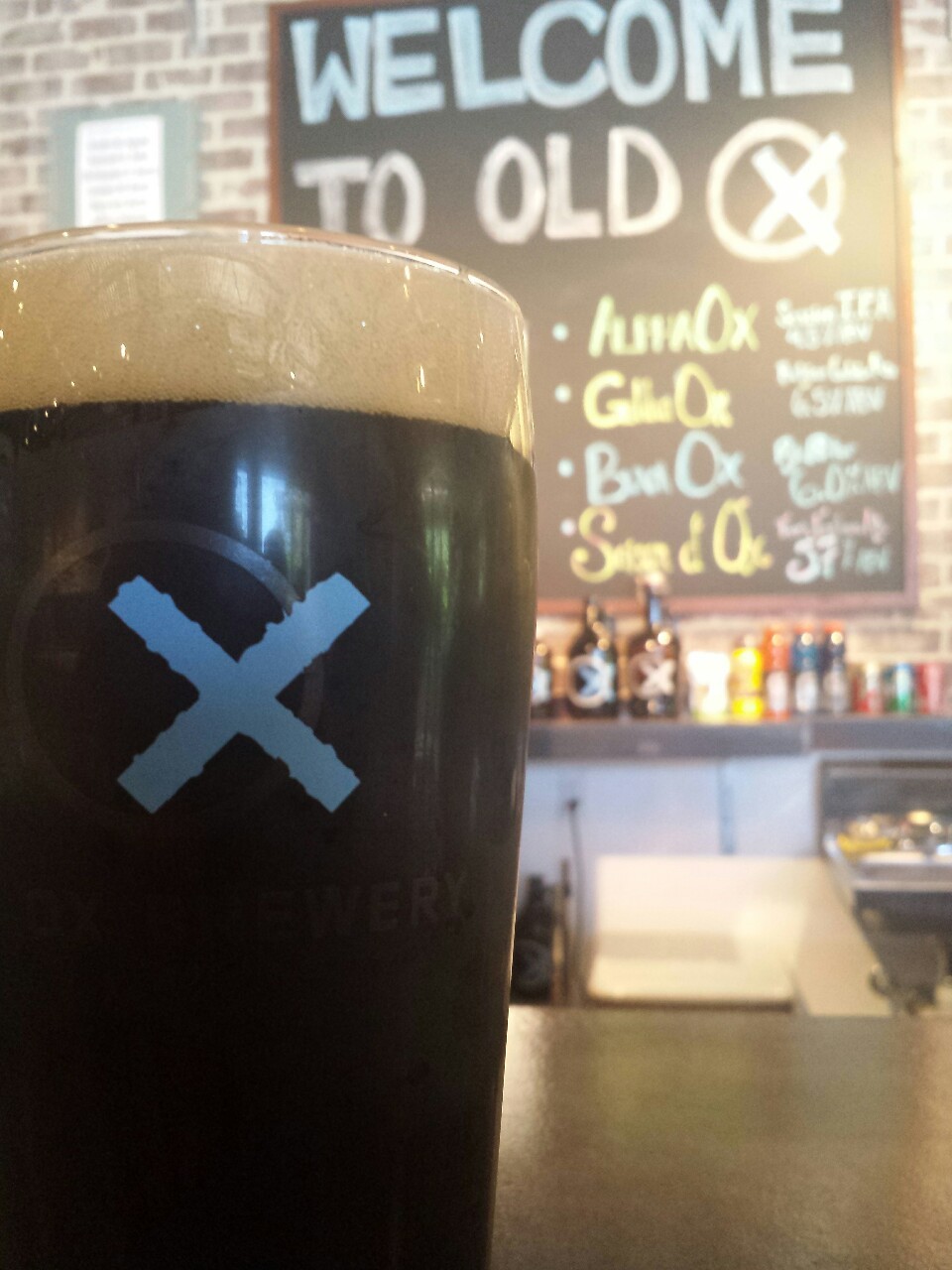
The Black Ox photobombed this photo
of the chalkboard
The beers at Old Ox were excellent as well! The four they had on flight when I was there were their Golden Ox Golden Ale, Saison d’Ox Saison, Alpha Ox American IPA and Black Ox Porter. I thought the Golden Ox was tremendous – it had a perfect balance of light hoppiness and refreshing malt sweetness. It was an easy drinker for sure. So too was the Saison d’Ox, which had a very light and pleasantly sweet malt backbone, with just enough tart edge to cut through the food I was eating from Jennifer (nice touch). The porter was equally wonderful – dark and malt forward… truly delicious! The IPA was a session IPA, so the hops were more toned down than I and my fellow hop heads usually like, but for a session IPA, it was very nice.

Old Ox also has a section of the production floor open to the public for additional seating and corn hole tournaments. It’s kind of nice to go in and take a look around, especially for us beer-obsessed folk who like to see where the magic happens.

I recommend a field trip to Old Ox for those of you in the DC/Maryland/Virginia area, or for those passing through. It’s a pleasant and laid back craft beer drinking joint. And if you’re a cyclist and you frequent the W&OD but haven’t yet stopped in, shame on you.

Here’s to craft-brewed happiness… Cheers!

Saturday, August 9, 2014

Virginia is for Craft Beer Lovers!!!


I’m not sure if you heard this or not, but August has been declared Virginia Craft Beer Month! There will be festivals, promotions, parties and lots of beer… all month long! It all boils down to a lot of self-congratulations and government/media “look at me” moments, but there’s beer involved… so it’s awesome!

Speaking of awesome “look at me” moments, have you noticed how many new breweries there are in Virginia? Just in Northern Virginia alone, growth has been through the roof! By way of illustration, here are some maps to compare and contrast. The first was what Northern Virginia’s craft beer scene looked like three short years ago:

Ah, memories...

Now, here’s a map of what we look like today:

Wowzers in me trowsers!!!

That is a literal crap-ton of growth in just three years’ time. In order to better dissect the second map, allow me to clue you in to what breweries those little icons represent.

In no particular order…

·        Adroit Theory Brewing Company – Purcellville, Virginia
·        Corcoran Brewing Company – Purcellville, Virginia
·        Belly Love Brewing Company (COMING SOON) – Purcellville, Virginia
·        Leesburg Beer Company – Leesburg, Virginia
·        Vintage 50 Brewery – Leesburg, Virginia
·        Crooked Run Brewing – Leesburg, Virginia
·        Lost Rhino Brewing Company – Ashburn, Virginia
·        Old Ox Brewery – Ashburn, Virginia
·        Beltway Brewing Company – Sterling, Virginia
·        Ocelot Brewing Company – Sterling, Virginia
·        New World Brauhaus (COMING SOON) – Vienna, Virginia
·        Caboose Brewing Company (COMING SOON) – Vienna, Virginia
·        Twinpanzee Brewing Company (COMING SOON) – McLean, Virginia
·        Mad Fox Brewing Company – Falls Church, Virginia
·        Capitol City Alehouse – Arlington, Virginia
·        Port City Brewing Company – Alexandria, Virginia
·        Forge Brew Works – Lorton, Virginia
·        Fair Winds Brewing Company (COMING SOON) – Lorton, Virginia
·        Potomac Ale Works (COMING SOON) – Woodbridge, Virginia
·        Heritage Brewing Company – Manassas, Virginia
·        Bad Wolf Brewing Company – Manassas, Virginia
·        Tin Cannon Brewing Company (COMING SOON) – Gainesville, Virginia
·        Old Bust Head Brewing Company – Warrenton, Virginia
·        Adventure Brewing Company – Stafford, Virginia
·        Barley Naked Brewing Company (COMING SOON) – Stafford, Virginia
·        Spencer Devon Brewing (COMING SOON) – Fredericksburg, Virginia
·        Blue and Grey Brewing Company – Fredericksburg, Virginia
·        Three Brothers Brewing – Harrisonburg, Virginia

THAT’S A LOT OF BREWERIES!!! AND I PROBABLY MISSED A FEW NEWCOMERS TOO!!!

Now you understand why Virginia is regarded as one of the fastest growing craft beer states in the nation. And why we need our own month. Virginia has seen the number of craft breweries increase by over 100% in the last three years, and expects that number to increase by another 100% in the next two years. This is not done yet folks. Virginia is well on its way to catching up to the elite craft beer states like Colorado and California. That’s right, I said it!

So drink up Virginia… this is your month. And as homework, you must visit and drink from all of the above listed breweries before Virginia Craft Beer Month ends. You have exactly 22 days remaining from the date of this publication. Ready… go!

Here’s to Virginia, craft beer and craft-brewed happiness… Cheers!

Saturday, August 2, 2014

Here Come the Pumpkins

See them marching, two by two...
So it’s August now. August 2nd to be exact. Kids are still on summer vacation. The pool is still open, which tells me Labor Day hasn't happened yet. The ice cream truck is still making its rounds. The temperature is consistently in the 80s and 90s. All these signs have pointed me at the following conclusion:

Summer is over… bring on the autumn harvest styles of beer!

I mean seriously, this happens every year, and it seems I write a scathing critique every year, which of course reminds me of Einstein’s definition of insanity – “doing the same thing over and over again and expecting different results.”

For years (seems like an eternity), Sam Adams fall seasonal variety offerings have been appearing on the shelves in August. It was annoying, but the Boston Beer Company is notorious for shark jumping escapades, so I was willing to ignore it. But now, this trend is boiling over into other breweries as well.

I've already seen the Southern Tier Pumking for sale in my local grocery store. I also saw a tweet the other day of a photo of Schlafly’s Pumpkin Ale for sale in a grocery store or specialty beer store. I have an immense amount of respect for Southern Tier and Schlafly, and their beers are always delicious, which is why I don’t like seeing their Pumpkins for sale in August.

Embedded image permalink
Yes! Pumpkin Ale for sale
in August!!!
Don't misunderstand me... I love Pumpkin Ales! I can't get enough of them! But not in August.

My misgivings are simple to understand: Pumpkin Ale is an autumn harvest seasonal style – not a summer style.

Summer beers should be light, crisp, refreshing, citrusy… all attributes that invoke visions of beaches and barbecues. They are deliberately not darker, roasted, or loaded with pumpkin pie spices the way Pumpkin Ales are.

I know Pumpkin Ales aren't necessarily fixed to specific date like an Oktoberfest or Christmas Ale, but nothing about pumpkins says summer to me. They are associated to Halloween and Thanksgiving, two holidays that are both clearly in the fall.

In fact, pumpkins aren't even in season until the fall, which means that when these Pumpkin Ales that hit the shelves in August were brewed, the fruit wasn't even in season… it wasn't even close. So it makes no sense from an agricultural perspective either.

But none of this matters. The reason the breweries are releasing the pumpkins in August is marketing. They have allowed themselves to fall into a trap where they release spring beers in January and summer beers in April. The next logical step after that is to launch the fall beers early too. Plus, there is a niche following for Pumpkin Ales, and people will go bonkers buying it as soon as it hits the shelves because they haven’t seen it since last fall… sales, baby!

This might be the most accurate depiction of people's reaction to pumpkin ale ever.

I understand that principle, and I certainly won’t decry a company for wanting to make money. I suppose this is a symptom of getting too big as a brewery… you lose the ability to take a stand and say “no” to marketing trends. According to Southern Tier’s website, they are aware of the “seasonal creep” with their Pumpkin Ale, but that's not something they can control. The beer is sold according to the distributors and retailers whims (aka marketing trends) and the brewers have no say in it. In other words, Pumpkin Ales are sold in August for the same reason that Christmas decorations are for sale the day after Halloween.

For me, I would release my Pumpkin Ale on Labor Day weekend, or whenever the kids go back to school. Release it at a time when summer is officially over and autumn is beginning. I know we’re only talking about one more month, but that’s all the more reason to wait. And if you need to make up sales revenues that you were counting on the Pumpkin Ales to bring you, how about celebrating another of the countless styles of beer that are generally associated with summer during the very obviously still summer month of August.

I say, “Enough of this ridiculous trend of releasing seasonal styles of beer ahead of season.” People like spring beers in winter because they’re tired of winter, and spring beers equal hope. People like summer beers in spring because everybody loves summer, and we all want to pretend it arrives before it actually does. Our love of summer is exactly why the autumn beers should stay in autumn. Styles are associated to specific seasons for a reason. Let’s keep them there.


Next thing you know, brewers will be brewing Pumpkin Ale all year round. Good grief.

Here’s to craft-brewed happiness… Cheers!