Saturday, July 19, 2014

Wandering Around, Meeting People and Getting Into Adventures

I'm sorry, did I break your
concentration?
This has been my summer… more or less. I've been doing my best at following in the footsteps of some of literature's most famed adventurers, and setting out to visit all of these wonderful craft breweries in my neck of the woods. And much like Geoffrey Chaucer in Canterbury Tales, Caine from Kung Fu and Kung Fu: The Legend Continues, and Jules Winnfield from Pulp Fiction, my wandering usually results in new friends and fascinating stories to tell.

And now, by way of a mid-summer after-action report of sorts, I will recount some of the highlights of the last five breweries I visited, providing you with useful information and giving some love to the brewers in the process.

Bad Wolf Brewing Company | Manassas, Virginia

I stopped in on a Sunday afternoon back in May while the wife and kids were out of town. The tap room wasn't overly busy, so the overall vibe was very laid back. They had some bluegrass music playing and the doors were open, allowing a pleasant early summer breeze to blow through.  The beers on flight matched the summery feel in the brewery, featuring three IPAs, a saison, a gose and a kölsch. They were their Sorachi Ace IPA, Jalapeno IPA, NEW Saison, Bad Moon Rising Gose, Unkölsch and Black Beard Mild.

A couple of gents discussing the world's problems over
some delicious Bad Wolf brews
The Sorachi Ace hops gave the first IPA a subtle spicy floral taste, with a touch of citrus behind it. The Jalapenos gave the second IPA a very unique (and hot) quality, which was exactly the opposite of the sorachi ace. The saison, gose and kölsch were all perfect summer beers, and I remember thinking that these three together really reinforced that spring was ending and summer was beginning. The mild was a medium colored, roasty, sessionable IPA which was not overly sweet or hoppy – just a tasty beer.

Bad Wolf is quickly becoming one of my favorite local breweries. Their nano-brewery business model fascinates me, their beers are always high-quality and interesting, and the people are just so darn friendly. Plus, they have that whole Dr. Who thing going on. I’m already thinking about going back.

Adventure Brewing Company | Stafford, Virginia

I was doing research for this astounding blog one Saturday morning when I discovered that a new brewery was opening in Stafford… that day. And of course I can’t pass up an opportunity to go to a grand opening of a local brewery, so I availed myself upon Adventure. Their brewery is very cool. They’re located in a (seemingly) quiet part of Stafford and have lots of room both inside and out. And since it was their grand opening, they were quite busy. They had food trucks with sausages, BBQ and ice cream, corn hole, and of course, brand new beers to drink.

Adventure co-owners Stan Johnson (left) and Tim Bornholtz
testing the alcohol content of their beer
They only had four beers on tap, which were their Backpack Wheat, Super Power Pale Ale, Expedition IPA and Stiletto Stout. The wheat was tremendous, with some very nice grape notes and sweetness. The pale ale, IPA and stout were also very good, but that wheat was great!

I also had the opportunity to talk to a few folks who were working there, and one of them told me that the bar was an old oak tree that used to be in front of the courthouse in Stafford until it fell over from wind or lightning – I’m not sure which. He also told me that the bar was the most expensive thing in the entire brewery! It’s definitely a cool touch… the bar is the obvious visual center of attention. Pretty sweet brewery… I’m already thinking of going back to this one too.

Old Bust Head Brewing Company | Gainesville, Virginia

On the next Saturday (still in May), I made the long drive, all the way out to the Fauquier County line, to the Old Bust Head Brewing Company. Old Bust Head was (and still is) under heavy construction at the time, so they were serving beer out of their brew house, which was an added bonus in my opinion – what better environment to drink beer in than in the stainless steel jungle? They also had a food truck serving burritos – also in the brew house – and some music playing on the speakers.

Horses get thirsty too at Old Bust Head
The beers they had were their Wildcat IPA, Chinquapin Chestnut Porter, Bust Head English Pale Ale and Chukker Czech Pilsner. The Wildcat is a slightly more bitter than sweet, IPA and is quite nice. The Bust Head Pale Ale is also more bitter than it is sweet, and finishes like a less hoppy version of the IPA. The Chinquapin is very interesting as it is made with chestnuts, which are very prominent in the taste, much like a nut brown ale. My favorite was the Chukker, which is strange to hear a hop head say, but it was one of the better pilsners I've had in quite a while. A rare thing indeed.

Old Bust Head is quiet, laid back, and warm and welcoming. Their staff is very friendly and the overall vibe is pleasant, just like you would expect from Fauquier County, Virginia. They are in the process of building the rest of their facility, including a proper tap room, so here soon, we won’t be sitting in the brew house drinking anymore (bummer). They also tend to have petting zoos on the grounds, so go talk to the animals… and have a beer! It’s totally worth the drive.

Lost Rhino Brewing Company | Ashburn, Virginia

On Independence Eve, I decided not to go to work, and instead drove up to Ashburn to the Lost Rhino Brewery. These guys are a bit of a hike for me, but always totally worth it… their beers are awesome! They also must have had some construction done recently because the place was completely different on the inside. No more stage with toys underneath it for the kids, for example. Maybe they had the face lift done a while ago and I just don’t get out there often enough (certainly possible).

Slinging beers at Lost Rhino
The beers I had at Lost Rhino that day were their Tupper’s 25k Rye IPA, Piedmont Pale Lager, Smokey and the Rhino Rauchbier, Final Glide Hefeweizen, Face Plant IPA, Meridian Kölsch, Bone Dusters Paleo Amber Ale, New River Pale Ale and Rhino Chasers Pilsner. By far, the best were Tupper’s 25k Rye, which was brewed in conjunction with Bob and Ellie Tupper’s 25,000th beer tasting, and the Bone Dusters, which was fermented with wild yeast from an ancient whale skeleton. The Face Plant, Final Glide and New River were also quite delicious as always.

I lived in Ashburn during the Old Dominion days, and even though those days are long gone, it’s pretty cool to know that Lost Rhino is up there, using the same equipment (and some of the same people) as Old Dominion did, before they took their talents to Delaware. I’ll definitely be back to Lost Rhino.

Forge Brew Works | Lorton, Virginia

And then there is Forge. Since Forge is located right next to my office, and since I am married to one of their employees, I seem to drink quite a bit of their beer… good thing it’s so awesome! I went over there last Thursday after work to drink a few beers with some friends, and as usual, the beer was great.
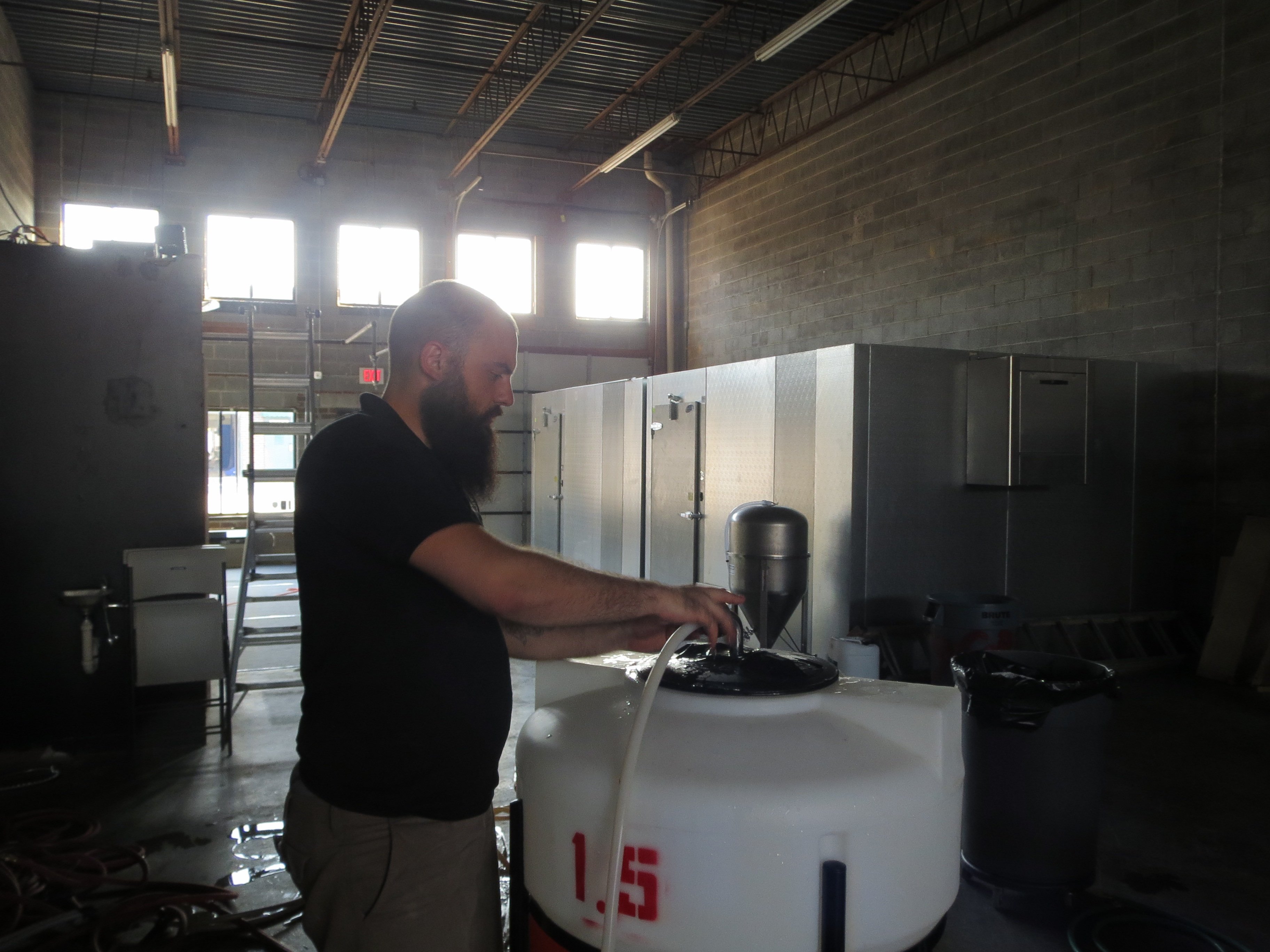
Forge brew master Matt Rose making something delicious
On this most recent occasion, I got into their Radler, Seaward Imperial IPA and Belgian Pale Ale. The Radler is a 50/50 blend of their petite saison and grapefruit soda, so it takes on a tropical sense – it reminds me of the Floridaweiss beers that they make down in Florida where they make a Berlinnerweiss and add tropical fruits to it. This one isn't as sour, but the flavors are similar. And obviously, the Seaward was tremendous as it always is.

Forge is currently serving a new single hop IPA made with Pacific Gem hops (get it while it lasts) and they just tapped a Rye IPA that was unofficially “randalized” as opposed to dry hopped, which I’m sure gives it a delightfully hoppy nose on top of that delicious rye backbone. I’ll have more to say about that once I've had it.

So that’s my summer so far… not too bad if I do say so myself. I am currently planning an expedition up to the district to stop in on Bluejacket Brewery and perhaps check out DC Brau’s new digs. Or Atlas, or 3 Stars, or Chocolate City… you know, whatever. I also want to get back down to Adventure and drink their new beers, and take a long weekend in NORTHERN Northern Virginia to stop in on Old Ox Brewery, Adroit Theory Brewing Company, Corcoran Brewing Company, Leesburg Beer Company, Vintage 50 Brewery, Crooked Run Brewing, etc. So much beer to drink, so little time.

Here’s to craft-brewed happiness… Cheers!

Saturday, July 12, 2014

Rare Beer Hunting Pays Off... Again!

I know I've written on this topic before, but I have cause to rehash it… I have cause to celebrate. I recently got my hands on a very special beer that is absolutely impossible to find in my neck of the woods. This rarity is considered by most enlightened beer people to be either number 1 or 1-A on the list of the best craft beers on the planet. Needless to say, this is a pretty big day in my life… right up there with my wedding day or the days my children were born. I’m just being honest, people.

Oh, and the beer in question is the coveted Heady Topper American Double IPA by The Alchemist, located in Waterbury, VT.

Another white whale has been checked off my list!

How did I get it? Glad you asked. If you remember back to some of my earlier expositions of rare beer hunting, the key to success is an expansive network of friends, partners, snitches, and well-wishers. Craft beer is truly a team sport, and to try to go it alone is only asking for heartache.

Not sure what perfection is, but this has to be close
In this particular case, one of my most trusted drinking collaborators was traveling home to the Boston area and knew a guy who knew a guy over in Northern Vermont, where Heady Topper is made. This mutual friend of a mutual friend was able to score a healthy amount of Topper and just like in the days of the Volstead Act, these shining cans of malted-barley-based ecstasy made their way across state lines and eventually into my fridge.

Heady Topper is only sold within 25 miles of Waterbury, VT and usually sells out within days or even hours of being released. This probably has a lot to do with the beer's reputation and lengths people are willing to go to get some. In fact, according to a news story from August 2013, Heady Toppers were being sold for $18 per can on the black market in Washington, DC.

As I mentioned, Heady Topper is a Double IPA, but it is not designed to be the most bitter or the strongest. The brewers’ intent is to highlight the different hop flavors and aromas of the six different hops that go into it. Flavors like orange, tropical fruit, pink grapefruit, pine and spice take center stage on your palate. It weighs in at 8% ABV and 75 IBU.

Just like with other white whales I've bagged over the years, I couldn't have done it without the network of friends and informants that made it happen. If rarities are what you seek, you need to know people, and in many cases, you need to know people who know people who know people. And so on, and so forth.

Beer in a can... always better!

P.S. - It's delicious! Here’s to The Alchemist, Heady Topper, people who know people, and America! Rare craft beer too!

Here’s to craft-brewed happiness… Cheers!

Saturday, July 5, 2014

"Prehistoric" Beer

I am the Ron Burgundy of beer drinking. Seriously.
You might think that by now, it’s pretty hard to impress me with beer. After all, I've been scouring the mid-Atlantic region and other various locales for a number of years now and I've seen and drank quite a few beers. I am on approach to the coveted rank of “Extraodinary” on Untappd. In other words, I’m kind of a big deal, if I do say so myself. And yet, every now and then, I stumble upon something truly remarkable that astounds even me. This past Thursday, on Independence Eve, I was once again amazed by beer.

And by the way, happy belated Independence Day!

The beer I found that astonished me on this occasion was in Ashburn, Virginia at the Lost Rhino Brewing Company, and was called Bone Dusters Paleo Ale. As a beer, taking no other information into account, Bone Dusters is a very tasty amber ale with a sweet finish and sessionable drinkability. But when you peel back the onion a little bit, you realize how interesting this beer really is.

Pretty cool artwork too.

Apparently, Lost Rhino’s yeast guy teamed up with an old college friend of his from a non-profit called Paleo Quest and cultivated a wild yeast strain from a prehistoric whale fossil that was unearthed in Dismal Swamp, near Chesapeake, Virginia. He then used this wild yeast to ferment Bone Dusters, with a percentage of the proceeds going to buy lab equipment for schools. It doesn't get much cooler than that.

Now before you freak out, let’s think about this. No, the yeast is not prehistoric. It was captured from among the fossilized bones, but unless preserved in amber, or frozen in ice, yeast cannot survive that long. This yeast is a contemporary strand of living wild yeast that was hanging out with the matrix (the stuff that bone fossils are surrounded by) around this prehistoric whale’s skeleton. Wild yeast is used all the time in making beer. In fact, wild yeast is all around us all the time, on the food we eat and in the air we breathe. You are breathing it in right now as you are reading these words.

So no, this is not gross. Not even a little bit.

The yeast they discovered hanging out with the whale bones is a subspecies of brewer’s yeast (Saccharomyces cerevisiae) called Saccharomyces cerevisiae var protocetus, named after the protocetid whale fossil that they swabbed to get it. Lost Rhino’s yeast guy recalled doubting heavily that the yeast would actually ferment, as it didn't hold up well in an alcoholic environment, but he was pleasantly surprised when they sprung to life and began converting sugars.

Jason Osborne and Jasper Akerboom
Jason Osborne (Paleo Quest) and Jasper Akerboom (Lost Rhino)
working on the Bone Dusters project
Some are skeptical about the use of the words “prehistoric” and “paleo” on the beer’s label and press release, saying that there is nothing prehistoric or paleo about the beer, and it’s just a publicity stunt. Sam Calagione, founder of Dogfish Head and maker of unusual beers for the sake of unusual beers, says in his book Brewing Up a Business (I’m paraphrasing) that there is no such thing as bad publicity, because in order to be taken seriously, you have to be recognizable. Recognition can be achieved through “good” publicity, but it can also be achieved through “bad” publicity. It’s easy for skeptics to bemoan what they deem to be marketing ploys or publicity stunts, but that is what sells products. Unfortunately, reputation alone is usually not enough. In Lost Rhino’s case, the beer isn't necessarily prehistoric, but it’s related to paleontology, so calling it “paleo ale” is not an attempt at deception – it’s selling a product.

But if you allow yourself to see a beer for what it is, and more importantly drink it for what it is, what you’ll find is that Lost Rhino’s Bone Dusters is a very tasty amber ale, as I alluded to earlier. Not only is it tasty, but it’s a tasty amber ale with a pretty cool story to tell. And some of the proceeds go to a good charitable cause. And science. And Virginia. What’s not to like?

It is currently available to drink or purchase out of the tap room in Ashburn, if you are in the area. I know they plan to make more, and I think they may even send it out to retail, so there is a good possibility you non-locals can get your hands on it soon, wherever fine Lost Rhino products are sold near you.

Here’s to craft-brewed happiness… Cheers!

Saturday, June 28, 2014

The Beers of Summer (Part 5)

This is going to be the final installment of the beers of summer series, not because there aren't more to dissect, but because I want to get back to writing on other things. I think over the past month, we've looked at a healthy swath of summer styles that you may encounter, and you've been armed with enough mind bullets to effectively meet your summer beer challenges like a professional. So with that, I give you the final, and perhaps weirdest, summer style of beer in this light-hearted 5 week exposition of summer beers…

Citrus and beer... what could be more summer?
The Shandy

Quite simply, a shandy is beer mixed with a soft drink, carbonated lemonade, ginger beer, ginger ale, or apple juice. Just like the other beers of summer in this series, the style comes from the old world – Germany – and is very popular over there to this day. They are known in Germany as biermischgetränke, or “beer-based mixed drinks,” and have taken on the name “shandy” in England, the U.S. and other English-speaking countries.

The proportion of the mixture is to taste, but is typically around 50/50. Because you are effectively “cutting” the beer with a non-alcoholic liquid at a ratio usually in the neighborhood of 50/50, shandies are typically low in alcohol. Completely non-alcoholic shandies also exist and are called rock shandies.

It's a good way to get me to ride a bike
The most common type of shandy is the radler, which is German for cyclist and is a reference to the beer’s reputation as a popular sports drink. Radlers consist of a 1:1 or 3:2 ratio of various types of beer and German-style soda pop or lemonade, which is a sparkling lemon soda like Sprite or 7-Up. In northern Germany, the beer is typically a pilsner and the drink is called an alster (short for alsterwasser), while in southern Germany, the beer is a weissbier and the drink is called a russ’ (Russian). Radlers are common today in Germany, Austria, Czech Republic, Hungary, Poland, Slovakia, Netherlands and Slovenia.

There are other types of German shandies (or biermischgetränke) that are popular as well. In Berlin, a very popular drink is a potsdamer, which is a 50/50 mixture of light-colored beer and soda, with a shot of raspberry syrup. In Darmstadt, a popular drink is the Whizz Peach, which is 50% krystallweizen and 50% peach-flavored lemonade. There is also the Berliner Weisse mit Schuss, which is a popular drink that consists of a light weissbier mixed with a shot of sweet syrup. There are three kinds: Grün which is green and tastes like woodruff, Gelb which is yellow and tastes like lemons and Rot which is red and tastes like raspberries.

Lager plus cola... obviously...
Another type of shandy that is popular in Germany, Italy and Portugal is called a diesel, and is a mixture of draft beer and Coca-Cola. These countries also enjoy what is called a tango, which is draft beer and gooseberry cordial.

A shandygaff is an older British name for a beer mixed with ginger beer or ginger ale. This is where the term “shandy” comes from. The Brits also drink what they call a Lager Top, which is basically a dash of lemonade added to a pint of lager.

And just like all the other beers of summer, here is my list of American versions that you should go out and get – to make your summer that much more refreshing. Do yourself a favor and avoid the urge to drink the Shock Top and Leinenkugel shandies as they are big beer and big beer is bad.

Curious Traveler Shandy – The Traveler Beer Co. – Burlington, VT: The Curious Traveler is a shandy made with barley, wheat, hallertau hops and fresh lemons and limes. It has an ABV of 4.4% and 7 IBUs. Traveler also makes a grapefruit version called Illusive Traveler and a strawberry version called Time Traveler.


Quite a refresher!

UFO Big Squeeze Shandy – Harpoon Brewery – Boston, MA: Sweet with a hint of tartness, UFO Big Squeeze Shandy is perfect for all of your summer adventures! The beer pours a hazy orange color with a fine foamy head. The aroma notes are clean citrus and wheat, and the taste is sweet with a tart grapefruit flavor.

Downright delicious!
Saranac Shandy – Matt Brewing Company – Utica, NY: Saranac Shandy is a refreshing blend of lager and lemonade. It is made with barley malt, Mt. Hood hops and lemons, and has an ABV of 4.2%.

Sam Adams Porch Rocker – Boston Beer Company – Boston, MA: Tart & refreshing, this unique summer quencher is our twist on the Bavarian Radler, named for cyclists that originated this drink.  Traditionally a mixture of beer and lemonade, for our take we combined the crispness of a golden Helles lager with a blend of lemons to create a fresh squeezed tangy taste perfect for the long yet fleeting days of summer.

Unfortunately, the style is still catching on here in America, so our options are still pretty limited. The good news is, it is catching on, and with companies like Traveler Beer Co. that exclusively make shandies, and many of your local brewers offering shandy versions of their staples lagers and other light beers, the opportunity to get into a delightfully refreshing shandy are all around you. And if you can find a bottle of German lemon soda, you can make your own at home! What a time to be alive!!!

Here’s to craft-brewed happiness… Cheers!

Saturday, June 21, 2014

The Beers of Summer (Part 4)

A proper witbier, served in a proper tumbler glass
Man, this “beers of summer” series is just like the fast and furious movies… against all logic to the contrary, they just keep making more. Hopefully, nobody dies… too soon?

If you've been following along at home, so far we've traveled from Germany to Belgium and back to Germany. Today, our virtual tour of summer beers takes us back to Belgium, to break down the classic Belgian style known as witbier.

Last week, while breaking down hefeweizens, I told you that there are (basically) two types of wheat beers – weissbiers and witbiers. There are also sour varieties, but they don’t fit neatly into any established groups, so for the sake of this explanation, let’s just ignore them for the moment.

If you remember, hefewiezens are German top fermented ales that are made with at least 50% wheat in the grist bill. By contrast, a witbier (aka white beer or witte) is a barley/wheat, top-fermented ale brewed mainly in Belgium and the Netherlands. It is brewed with either raw wheat or wheat malt, and there is no prescribed ratio from wheat to barley. Many brewers have been known to add oats as well to help with lautering, which will give the beer an even lighter and cloudier finish. The finished product appears hazy, or “white” when cold due to suspended yeast and wheat proteins in the beer, hence the name “white beer.”


These monks are getting medieval on their beers... see what I did there?

Witbier is a descendant from the medieval beers that were brewed with gruit instead of hops… in the pre-hop era. Gruit was a blend of spices and other plants that flavored and preserved medieval beer. Witbiers are still made with gruit today, which consists of coriander, orange, bitter orange, various oddball spices at the brewer’s discretion, and a little bit of hops. This combination of spices, fruit and hops give the beer a slightly hoppy flavor, as well as a somewhat sour taste due to the introduction of lactic acid. Witbiers are also known to have a crisp mouthfeel, which is a byproduct of the wheat and the lively carbonation.

Witbiers are often served with a lemon, but just like with hefeweizens, you should avoid this practice. In the case of witbiers, they are already citrusy, so there is no need to add a citrus wedge, and all you’re really going to accomplish is screwing up your head retention.


Pretty straight forward, actually...

Many brewers here in the States have taken a liking to witbiers, and have done a very good job of sticking to the style. Some such American versions of the style are…

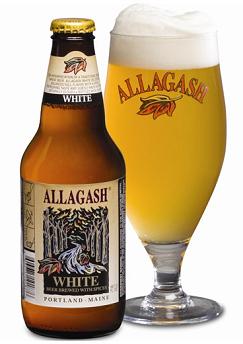
Allagash White – Allagash Brewing Company – Portland, Maine: Brewed with a generous portion of wheat and spiced with coriander and Curacao orange peel, this beer is fruity, refreshing and slightly cloudy in appearance.

White Rascal – Avery Brewing Company – Boulder, Colorado: A truly authentic Belgian style wheat or “white” ale, this Rascal is unfiltered (yup, that’s yeast on the bottom) and cleverly spiced with coriander and Curaçao orange peel producing a refreshingly zesty classic ale.

Ommegang Witte – Brewery Ommegang – Cooperstown, New York: Uniquely refreshing and less sweet with more of a wheat tang in the finish.

Florida Cracker – Cigar City Brewing – Tampa, Florida: Florida Cracker White ale is brewed with unmalted wheat, orange peel and coriander and then fermented with a French Saison yeast strain to give it a spicy and dry finish.

Optimal Wit – Port City Brewing – Alexandria, Virginia: Optimal Wit is brewed with raw wheat and oats, and steeped with coriander, orange peel and grains of paradise. This ale is a pale golden color with a bit of cloudy haze from natural yeast in the bottle. This unfiltered ale offers layers of complex, nuanced flavors that evolve in the glass. It finishes crisp and refreshes the palate.

Alaskan White – Alaskan Brewing Company – Juneau, Alaska: Alaskan White Ale has a soft, slightly sweet base with the unique spice aroma of coriander and crisp, citrus finish of orange peel. A light and effervescent body combined with the smooth palate creates a complex and delicate beer that is deliciously refreshing in any season.

Great White – Lost Coast Brewery – Eureka, California: A Crisp beer with a hint of citrus, made with two-row malted barley, unmalted wheat, a secret blend of Humboldt herbs, crystal clear mountain water and ale yeast.

And as always, look to your local brewers to lead the way. This time of year, and in many cases all year round, your local brewers are serving up their own interpretations of the witbier style and the results are usually amazing.

Here’s to craft-brewed happiness… Cheers!

Saturday, June 14, 2014

The Beers of Summer (Part 3)

Cloudy. Glorious.
It’s been a bit cloudy of late here in Northern Virginia, and I’m not talking about the atmosphere.

The third beer style in this Beers of Summer Series is none other than everyone’s favorite, and I mean that literally because I have yet to meet someone who doesn't love this style… the Hefeweizen.

Hefeweizen, or simply “Hefe,” is a German wheat ale (top fermenting yeast) that is typically pale-golden in color, cloudy in appearance, and has a sweet flavor with a tart edge to it.

In order to understand specifically what a hefeweizen is, you first must understand some of the ins and outs of wheat beers. First of all, there are two different types of wheat beer. The first is called “witbier,” which means “white beer” in Dutch and is made with Belgian traditions of using raw un-malted wheat and coriander and orange peel for flavoring. The second is called “weissbier,” which is German for “white beer” and is made in the German tradition of using at least 50% wheat to barley malt. Both Belgian witbier and German weissbier are called “white beer” because the word “wheat” has the same root as the word “white” does. There are also the sour varieties, like berlinnerwiess, lambic and gose, but those are quite different than the first two.

Breaking it down even further, there are different makes and models within Germany itself. In the northern and western regions, it is called “weizen” (or wheat) but in Bavaria, it’s called “weissbier” or “weisse” (white beer or white). Hefeweizen, with the prefix “hefe” meaning “yeast,” is the German name for an unfiltered wheat beer, while krystallweizen, with the prefix “krystall” meaning “crystal,” is the German name for a filtered wheat beer. Make sense?
Standard phenol. NBD.

The cloudiness and light color of hefeweizens are both byproducts of the high amount of wheat used in the gristbill. The flavor can also be attributed to wheat, but usually comes more from the yeast strand, which produces unique phenolic flavors of banana and cloves, and sometimes even some spiciness, bubblegum or apple flavor. The yeast also gives the hefeweizen a dry and tart edge to it. A proper hefeweizen has little hop bitterness (around 15 IBUs), relatively high carbonation and only a moderate alcohol level.

Hefeweizens are properly served in a weizen glass and in America, by people who don’t know any better, with an orange or lemon wedge. The citric acid from the wedge will (theoretically) cut the wheat and/or yeast and give the beer a flavorful “snap.” In reality, citric acid is going to screw up the beer’s head retention, and it adds unneeded flavor to an already brilliant flavor profile. As a rule, witbiers contain citrus on purpose, and hefeweizens do not, again, on purpose.

The three major brands of hefeweizen in Germany are Erdinger, Paulaner and Franziskaner. Other renowned brands are Weihenstephan, Schneider, Maisel and Andechser. The style is popular throughout Germany, but is especially popular in Bavaria.

Here in the States, we make countless examples of the style, and some of the better ones I've encountered are… (These descriptions are taken from the brewery websites and are the intellectual property of the brewery listed.)

Sierra Nevada Brewing Company’s Kellerweis Hefeweizen – Chico, California - Inspired by traditional Bavarian techniques, Kellerweis is a true artisan experience. With Kellerweis, we brew in open fermentation tanks—a process rarely seen today—to let the ingredients truly shine. The result is a hazy wheat ale—untamed, raw and alive. With a full, fruity aroma and notes of spicy clove and banana bread, Kellerweis is a truly unique brew.

Tröegs Brewing Company’s DreamWeaver Wheat – Hershey, Pennsylvania - Long toasty days, cool breezy nights and a splash of magic provide the inspiration for the Tröegs brothers’ dreamiest  creation—Dreamweaver Wheat. Combining wheat with Munich and Pilsner malts, German Northern Brewer hops, open top fermentation and a yeast strain that imparts a peppery, clove taste with a slight hint of banana, Dreamweaver Wheat is an unfiltered blast of spicy, mouthwatering joy.

Flying Dog Brewery’s In Heat Wheat – Frederick, Maryland – In heat wheat is a German-style Hefe made with malted white wheat and Munich malts, and German perle hops. It has huge banana and clove notes and pairs well with seafood, chicken, tomato, tangy cheeses and fruit salads.

Sly Fox Brewing Company’s Royal Weisse – Phoenixville, Pennsylvania - An unforgettable Bavarian-style Wheat Beer brewed with German Pils and Wheat malts and hopped with German Northern Brewer hops. This beer is unfiltered and served in a traditional wheat beer glass at our pubs. Medium bodied, honey in color, fruity.

DC Brau Brewing Company’s El Hefe Speaks – Washington, DC - EL HEFE SPEAKS! is a traditionally brewed German-style Hefe. It is fermented around 65°F and hopped with German Tettnang hops. 11 IBUs and 5.3% ABV make this one extremely drinkable.

Schlafly Brewing Company’s Hefeweizen – St. Louis, Missouri - Our Hefeweizen is a light, unfiltered wheat beer, often served with a wedge of lemon. Made with thirty percent American winter wheat, Hefeweizen is balanced with sweet golden malted barley and Tettnang hops from Oregon that evoke a hint of spice. The American ale yeast is subtle, but  the grains take center stage and, when left in the unfiltered beer, gives it that classic cloudiness and additional body.

Victory Brewing Company’s Mad King’s Weiss – Downingtown, Pennsylvania - Bavaria’s fabled Ludwig was said to be ‘mad.’ The same might be said of us for approaching this German beer style with fistfuls of hops beyond the norm for this style and yeast from Belgium! High-powered with all German malts and the subtle, spicy complexity of our special yeast, Mad King's Weiss offers a quenching quality that can't be beat.

This list is certainly not comprehensive, but it’s a good start – particularly for those of us in the Mid-Atlantic Eastern Seaboard region of the country. As I've advised in all of the Beers of Summer Series blog posts, go to your local breweries and drink their hefeweizen, which is certainly on the menu this time of year. Why just last night, I got into a growler of Forge Beer Works’s Hefeweizen from Lorton, Virginia and it was tremendous.

Here’s to craft-brewed happiness… Cheers!

Saturday, June 7, 2014

The Beers of Summer (Part 2)

Don't do it
No time for cheesy Don Henley lyrics this week… let’s get to it.

Unlike last week’s style du joir, this week’s summery style of beer is one more and more people have actually heard of… the saison. You may see that word and allow your pretentiousness to get the best of you… don’t do it. If you walk into a bar and pronounce that word with a thick French accent, you will quickly and remorselessly be ridiculed. The only two accepted pronunciations on this side of the pond are (SI-zon) or (SAY-zon). Notice that the emphasis is on the first syllable, and notice that the second syllable begins with a “z” and not an “s.” You can accuse me of bullying if you want to, but I’m only trying to help. It is hilarious to those of us “regulars” when someone comes into a brewery tap room and asks for the saison, while pronouncing it with a pretentious French accent. I’m just trying to save you from being that guy.

Okay… now down to business.

Saison literally means “season” in French, and is broadly defined as a pale ale that is highly carbonated, fruity, spicy, and generally weighs in at around 7% ABV. The style originated in Wallonia, the French speaking region of Belgium, where it was originally brewed in farmhouses during the winter months and then drank by the farm hands during the summer months. It had to be brewed in the winter due to the lack of refrigeration and lack of yeast control in hot temperatures. Not to mention, it gave the farm hands something to do during the non-farming cold time of year. It is believed that the original saisons were lower in ABV, and were provided to the workers as an alternative to water, which wasn’t safe to drink.

étalon-or
And these workers were referred to as “les saisonniers” or “seasonal workers,” so calling the beer saison seems to fit nicely. I wonder which came first, the saison or the saisonniers?

The global gold standard for saisons is the Saison Dupont, which is brewed at the Dupont Brewery (or Brasserie Dupont in French) in Tourpes (Leuze-en-Hainaut), in the center of West-Hainaut, Belgium. The current brewery has only been open since 1950, but the farm it sits on has been in operations and brewing Belgian beers since 1759. The farm also contains a bread bakery and cheese-making facility.

Not too long ago, Saison was close to becoming an endangered style, but has been saved due to a massive revival in the United States. ‘Murica!

Modern saisons, brewed primarily in Belgium and the United States, are exceedingly popular and usually have more kick than their ancient brothers. In the U.S., we tend to copy the yeast used by the Dupont Brewery when we make our saisons. This yeast ferments at warmer temperatures (84 to 95 degrees) than the standard 64 to 75 degrees used by other Belgian saison brewers.

As for the beer itself, the type of malt will determine the color of the saison. Most saisons are made with pale or pilsner malt, which give the beer a cloudy golden color, however many brewers elect to use darker malts to give their saisons a reddish-amber hue, just to be different. Some brewers have even been known to use wheat in addition to barley, which will cloud the beer up even more and give it a lighter complexion.

Golden and cloudy, crisp and refreshing, everything you want and nothing you don't

Saisons are not known for their hop profiles, but they are typically very flavorful. The flavor, other than what is imparted by grain, comes from spices such as orange zest, coriander, and ginger. Some spice character also comes from the production of esters during fermentation at warm temperatures. Saisons tend to be semi-dry with many only having a touch of sweetness to them.

Some of the best beers of summer fit into this style of beer, and here are some recommendations to get you started: (Note – these are commercial descriptions and not my reviews. In order to properly review these beers, I would either have to reacquire them and drink them all to give you notes, or recall back to when I last had them all and remember what I thought at the time. Neither of those scenarios is going to happen here, so I’ll give you the commercial tasting notes and descriptions, which are the intellectual property of the brewery they’re attached to.)

Hennepin (Farmhouse Saison) – Brewery Ommegang, Cooperstown, NY: A moderately hoppy, farmhouse-style ale with a champagne-like effervescence, Hennepin has a crisp start followed by malt sweetness balanced with a firm bitterness. Hennepin has a bounty of great flavors: ginger, spice, orange and toasted grain. Pouring a bright golden color with a spicy-sweet balance of orange peel, sweet malt, hops and ginger, Hennepin makes way for a dry finish with a slight bite of ginger.

Saison Rue – The Bruery, Orange County, CA: Saison Rue is an unfiltered, bottle conditioned, Belgian/French-style farmhouse ale. This is a beer of subtlety and complexity, with malted rye, spicy, fruity yeast notes, biscuit-like malt backbone and a slight citrus hop character. With age, this beer will dry out and will become more complex with rustic notes of leather and earth from the contribution of a wild yeast strain. Being a saison, Saison Rue is ambiguous unto itself as it is a different beer when fresh and when aged.

Saison Du BUFF – Stone Brewing Co, Escondido, CA; Dogfish Head Brewery, Dover, DE; Victory Brewing Co, Downingtown, PA: Saison du BUFF is a 6.8% ABV Saison brewed with parsley, sage, rosemary and thyme. The beer is brewed three times, once at each brewery using the same recipe.

Colette Farmhouse Ale – Great Divide Brewing Co, Denver, CO: Colette is a homage to the saisons that Belgian farm workers have enjoyed for centuries. Brewed with barley, wheat and rice and fermented at high temperatures with a special blend of four different yeast strains, Colette is fruity and slightly tart, with a dry finish that makes it that rarest of treats — a beer as refreshing as it is complex.

Red Sky at Night (Saison Ale) – Heavy Seas Beer, Baltimore, MD: This rustic farmhouse ale is crafted with an eye for tradition: Belgian yeast and candi sugar shape the aroma and taste of Red Sky at Night. Fruity and bright, the straw-colored saison has a dry, somewhat tart finish from Strisselspalt hops. Notes of banana, apricot, clove, and allspice make this a slightly honeyed, herbaceous beer. The authentic candi sugar gives Red Sky lightness and robustness.

…and of course…

Saison Dupont - Brasserie Dupont, West-Hainaut, Belgium: Saison Dupont is a classic Belgian farmhouse ale. This is a beautifully balanced, complex beer that has a refreshing fruitiness and long, dry finish. It is bottled unfiltered so it may be cloudy or have a slight sediment but this is normal and perfectly natural.

That should be enough to get you started, as far as your shopping list is concerned, but most of your local breweries will be offering this style this time of year as well. I highly recommend you take this beautiful Saturday and visit your local brewers, and order a saison (please don’t pronounce it the French way). The results are magical.

Here’s to craft-brewed happiness… Cheers!