Saturday, November 1, 2014

I Fear You've Underestimated the Dark Side

Party time on the Death Star
I hope everyone’s All Hallows Eve festivities were safe and memorable. I hope you had your fill of pumpkin ales and other spooky creations. I hope you got a lot of candy, and nobody called the cops.

October is over – November is here. Generally, November beer consists of the pumpkin beers left over from Hallowe’en and the beers you will pair with your Thanksgiving feast. Those are both perfectly legitimate ways to categorize your November beer drinking plans, but there are others, and since we've covered pumpkin beers ad nauseam and will get to Thanksgiving when we’re a little closer to the holiday, I propose a third option.

Dark beers.

A few years back, I wrote on the topic of dark beers, specifically to separate myth from reality and expose the shenanigans that BIG BEER marketing had managed to pull off regarding light versus dark beer. Now it’s time to further develop the idea of dark beer, with a focus on the total landscape of what dark beer is and can be.

Obviously, everyone knows about stouts. Stouts originated when the Irish decided to one-up the English by adding darker-roasted barley to the English porter ales to create a darker, stronger beer. Believe it or not, dry Irish stout (like Guinness) is only one type of stout porter ale. Other variations include sweet/milk stout, oatmeal stout, coffee stout, foreign extra stout, American stout, oyster stout and imperial Russian stout. Some breweries like to experiment with putting different fruit combinations into stouts, which sounds weird, but since stouts tend to have chocolate characteristics, blending fruit with them usually results in a dessert-like beer.
Look at that cloud!
The other style which usually comes to mind when thinking of dark beers is the porter ale – which is technically the same style as stout, but with less or slightly lighter grain in it. Porters were created during the Industrial Revolution in England and were a local favorite among the industrial workers of the day. Porters are divided into three approved categories: brown porter, robust porter and Baltic porter, with each getting progressively stronger. I've also seen imperial porters before, which of course would indicate that the brewer used more malts and hops than a Baltic porter allows for.

You may also encounter an English Brown Ale, which range from mild (as in not a lot of hops) to Southern English or London-style Brown, which are darker, sweeter and lower gravity than their northern cousins, to the third and strongest Northern English Brown Ale which are higher gravity, more hop-oriented and drier than the Londoner varieties. Nut brown ales generally fall into the third category as well.

If you leave the UK and travel to Germany, the dark beers move into the lager category. One such style of dark German lager that is a personal favorite is the Schwartzbier, or black lager. Schwartzbiers are a variation of a Munich-style Dunkel but with darker roasted-barley and a touch more hops. The hops are completely overwhelmed by the malt so the beer is sweet as opposed to bitter. They have a light body and are typically lower ABV so they are quite easy to drink.

In Belgium, they have the Belgian Dark Strong Ale, which isn't typically black like some of the others I've listed here, but they are dark, very rich, complex and very strong, bordering on dangerous. They can range up to 12% ABV and are generally quite full-bodied, depending on the brewery. Malt sweetness and alcohol dominate the flavor and aroma.

No... what do they say?

Here in the States, we've concocted a beer that is either called black IPA or Cascadian ale, depending on where you are. Essentially, this is a beer that is heavy in both hops and dark-roasted barley… think of either a hoppy stout or a dark IPA. They are usually sweeter than they are bitter and can either be modestly alcoholic or full-on face-melters.

Of course, the secret to all of this is the malt. If the ratio of dark-roasted barley to lighter grains is high, the beer will be dark. It can be any style of beer, though the forefathers had names for most of the dark applications of malt… and that’s why we have the BJCP style guide… so we brewers have something resembling standards by which to design our beers.

Don’t be afraid of dark beers. They may look menacing, but are generally sweeter than their lighter counterparts, and are not necessarily “bigger and full-bodied” the way you might assume they are. Now that it’s November and getting cold again, they can be a perfect way to stay warm and full of cheer.

Here’s to craft-brewed happiness… Cheers!

Saturday, October 25, 2014

Just Exports? No Imports?

An arbitrary Saturday in October calls for an arbitrary blog post on a style of German beer that is not so common here in the States… the Dortmunder Export, or 1E in your BJCP Style Guide.

Das Union Brauerei, Dortmund, Germany
Dortmunder Export, or simply Dortmunder, is a pale lager that was originally brewed by the Dortmunder Union Brewery in Dortmund, Germany in 1873. Dortmunders quickly became a hit among the industrial workers of Dortmund and led to Dortmunder Union becoming Germany’s largest brewery, and the city of Dortmund having the highest concentration of breweries in Germany. This of course changed with the decline of heavy industry in the area and by 1994, Dortmunder Union merged with several other breweries in Dortmund to form Brinkhoff’s Brewery.

Dortmund was an early commercial brewing center in Germany, with many breweries producing a dark wheat beer and exporting it to the neighboring cities in the Westphalian area of Germany. But in 1873, Pilsners were all the rage and a group of Dortmund brewers got together and formed the Dortmunder Union Brewery to brew their own golden colored, pale barley based, slow fermented beer under the guidance of brewmaster Fritz Brinkhoff. They produced two types: a Lagerbier and a slightly stronger Export version at around 5.5% ABV. The weaker version never caught on and was eventually scrapped.

So much fun to be had...

After WWII ended, Dortmunder Export was the most popular type of beer in Germany until Pils took its place in 1970. It hit a low point in late 1990s (right around when Dortmunder Union closed its doors) but has risen back up a bit in recent years.

Since 1873
Dortmunder Exports are pale golden in color and balanced – with the malt profile of a Helles/Munich Lager and the hop characteristics of a Pilsner, although slightly stronger than both. Neither hops nor malt dominate, but both are well balanced to provide a smooth, crisp and refreshing beer with a touch of sweetness. The subtle hop bitterness lingers in the aftertaste, although some Dortmunders finish with a slightly sweet taste. Low to medium hops are present in the nose, as well as moderate malt aroma.

Hard, minerally water is another common trait of Dortmunder lagers. The Dortmund water consisted of high levels of sulfates, carbonates and chlorides, which were often present in the taste and mouthfeel of the finished product. Some contemporary purist brewers may try to recreate that effect through burtonization, but I really don’t think that is necessary.

Some good commercial examples of this style to be on the lookout for are Germany’s DAB Export, Ayinger Jahrhundert Bier, and Great Lakes Brewing Company’s Dortmunder Gold and Dominion Lager here in the States. I also hear through my network of informants that local favorite Forge Brew Works in Lorton, VA is working on a Dortmunder… so stay tuned for that!

A very fine American version

Here’s to craft-brewed happiness… Cheers!

Saturday, October 18, 2014

When the Levee Breaks...

Almost seems like a job for the Doctor
Here’s a bit of fun beer history trivia for your mid-October Saturday afternoon needs: Yesterday was the 200th anniversary of the London Beer Flood. It’s exactly what it sounds like – over one million liters (264,172 gallons) of delicious porter erupted from a broken vat at the Horse Shoe Brewery  in London on 17 October 1814, creating a tidal wave over 15 feet high that killed eight people and demolished two nearby homes. Between 8 and 9,000 barrels of beer were lost in the accident.

After the initial tidal wave, the beer inundated the nearby slum area of St. Giles Rookery, flooding basements where whole families lived. Local Londoners responded to the disaster to aide with search and rescue, and according to some reports, didn't steal a drop of the brew that was all over the streets. Other accounts, which appear to be unfounded, spoke of drunken riots as people drank the lost beer.

According to inspectors’ notes, there had been an indication that the vat was unstable earlier in the afternoon the day of the accident. Apparently, a metal hoop had snapped, however the brewery was cleared of any wrong doing and received a refund for the excise duty they paid prior to making the beer. Horse Shoe Brewery went back to work producing beer shortly thereafter, but they closed their doors for good in 1921.

From the newsies of London Town

This of course makes me wonder how it would've gone down in 21st Century America.

First of all, we need to suspend reality for a moment, because obviously, our completely unoppressive laws don’t allow for production breweries to exist in commercial, retail or residential areas. In fact, our government has a tough time differentiating between production and nano/peco “neighborhood” breweries, which are also difficult to place in a retail space, at least for now.

But if we pretend that a production brewery could exist juxtaposed to a residential neighborhood area, and that facility did have an accident similar to the London Beer Flood of 1814, I have a sneaking suspicion that your average American would in fact help themselves to free beer from the street. There is obviously a health concern involved, but I still think people would find a way to get over it and take advantage of the lost brew.

Save the beer!
I do not perceive that it would be quite the emergency that the London flood was, and therefore the urge to play the hero wouldn't be present. There would be nothing stopping people from dropping what they were doing for a good old fashion drinking party.

Not to mention that the cleanup involved would shut down traffic for a month (here in the DC metro area anyways) and the subsequent inability to move would only lend to the lack of motivation among the general populace, and therefore push them towards getting drunk on free beer.

In other words, while the stories of drunk Londoners might be unfounded, I think Americans in 2014 would absolutely take the opportunity for a party. In fact, it seems highly unlikely that the Londoners didn't get plastered during their flood too, but if the storytellers say so… so be it.

Anyways, there’s some interesting history for you.

Here’s to craft-brewed happiness… Cheers!

Saturday, October 11, 2014

Beers That Go Bump In the Night (Redux)

A few years back, I published a blog post on the topic of selecting beers to serve at your Hallowe’en party. I figured that since that topic is reemerging leading up to the 2014 observation of All Hallow’s Eve, and that particular post is a few years old now, what better opportunity to update my thoughts on the subject and give you some current Hallowe’eny recommendations. Although, the ones from two years ago still apply as well.

This list is in no particular order, and is nowhere even close to comprehensive.


Mischievous little beer
Warlock, by Southern Tier Brewing Company in Lakewood, NY

The first beer I recommend you go get for your late-October partying needs is Southern Tier’s Warlock. Warlock is an Imperial Stout that is brewed with pumpkins and weighs in at 8.6% ABV. It’s dark, mysterious and delicious, with a huge roasted character and spicy pumpkin pie aroma. And since it’s made by the same people that make the world famous Pumking (pumpkin ale), it pairs well with that beer, almost like they did it on purpose. Warlock also pairs well with BBQ, smoked or roasted food, vanilla ice cream (especially floating in the beer) and carrot cake!


Bear plus deer equals beer. Get it?
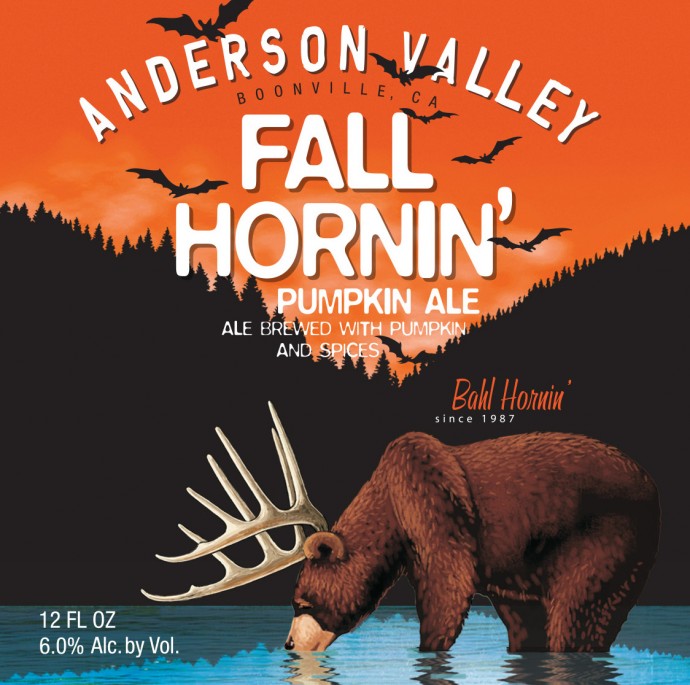
Fall Hornin, by Anderson Valley Brewing Company in Boonville, CA

This pumpkin ale is a lot less menacing than the Warlock… much more of an easy drinker at 6% ABV. Flavor notes include caramel and spices, and the nose consists of caramelized malt and baked bread, with subtle hints of cinnamon, nutmeg, pumpkin and seasonal spices. Fall Hornin goes quite well with sweet fruit desserts, roasted vegetables, and steak.


Ole reliable
Pumpkin Ale, by Schlafly Brewing Company in St. Louis, MO

Schlafly’s pumpkin ale is definitely one of the best pumpkin ales on the market, and it is easily found in just about every region of the country. It’s an 8% ABV brew so it packs a little punch, but there is no alcohol burn at all. This is a very smooth, balanced, sweet pumpkin beer that is everything you want and nothing you don’t. Flavors consist of roasted pumpkin, cinnamon, nutmeg and clove. This one will pair well with hamburgers, roasted vegetable dishes and sweet desserts.


Great beer
Pumpkin Hunter, by Devils Backbone Brewing Company in Roseland, VA

Getting a bit more local (to where I live anyways), I give you the Pumpkin Hunter from Devils Backbone. It is a delicious orange/amber colored brew with subtle pumpkin sweetness and pumpkin pie aroma in the nose. It’s an easy drinker at 5.1% ABV, and pairs well with grilled meat, roasted vegetables and deserts.


Rare, but awesome
Fermentation without Representation, by Epic Brewing Company in Salt Lake City, UT and DC Brau from Washington, DC

FWR is a collaboration between two terrific breweries that sought to build a spectacular imperial pumpkin porter. This beer is smooth, blending light and dark roasted barley, pumpkin, allspice, nutmeg, ginger, cinnamon and cloves. The resulting beer is delicious, with chocolate, burnt raisins and plum notes in the flavor. It’s 8% ABV, so you’ll need to be careful with it, but definitely worth the effort it takes to find it.


Bet you can't drink just one...
Post Road Pumpkin Ale, by Brooklyn Brewery in New York City, NY

Post Road is a very sweet pumpkin beer. It is orange/amber colored with a pumpkin nose and biscuit and pumpkin centered flavor. It’s only 5% ABV, so you could drink several with little problems, but the sweetness can be overwhelming. Still, very delicious and a welcome addition to your partying needs. Pair this with roasted ham and turkey, root vegetables, or mac and cheese.


No filter required.
UFO Pumpkin, by Harpoon Brewing Company in Boston, MA

Harpoon’s UFO (UnFiltered Offering) Pumpkin is an unfiltered pumpkin ale that combines Pacific Northwest hops, spices, barley and pumpkin to create a cloudy orange brew that is sweet and earthy. It is 5.9% ABV and drinks easily with a sweet finish and aftertaste. I recommend pairing it with desert, or with anything off the grill.


It’s certainly not a comprehensive list, but it’ll get you to where you want to be. Some of these are heavy hitters, and others are perfect for your guests who are little gun-shy about the whole craft beer and pumpkins thing. I’ve also given you some informal tasting notes with which you can plan your menu. You’re welcome.

And happy Hallowe’en.

Here’s to craft-brewed happiness… Cheers!!!

Saturday, September 27, 2014

Keys to Winning Oktoberfest

So just in case my failure to deliver a blog post last week means you’re unaware that Oktoberfest started, consider yourself informed – Oktoberfest 2014 is raging in Munich as we speak. And I do apologize for leaving your insatiable thirst for craft beer knowledge unquenched… beer had to be made and the hours got away from me, and my own personal festing may have rendered my ability to write cogent thoughts worse than it usually is.

Speaking of non-cogent thoughts…

Now that you've been freed from the rock you were living under where they didn't tell you it was Oktoberfest, it’s time to make up for lost time. As a seasoned professional, I am here to relay some tips and tricks I've picked up over the years that will help you have a fantastic fest. No charge, because beer knowledge should be free.

The first tip is…

GET OFF YOUR BACKSIDE AND GO TO MUNICH, YOU LAZY BUM!!!

The end. Thanks for reading.

Merriment ensues...
But what if we can’t go to Munich?

Okay, so we all can’t afford to drop everything and drink beer in Munich, Germany for 16 days. Fortunately, I have some alternative tips and tricks to make your Oktoberfest experience almost as cool as actually going.

Step 1: Drink German beer

I’ll be honest. I drink American beer pretty much exclusively. In my opinion, we have reached a point in our brewing where we are setting the standard globally for quality craft beer. Even in traditional German styles, there are plenty of good American-made versions that are truly excellent. An exception to this rule (for me) is during Oktoberfest, when I make an effort to drink Märzen lagers that are made in Munich, such as Hacker-Pschorr, Paulaner, Spaten, Augustiner, Hofbrau, Löwenbräu, Weihenstephaner, etc. These are all very good Oktoberfest lagers that will get you in the festing mood.

Step 2: Eat food

I would say eat German food, but the point here is not a cultural one… in general, eat some freaking food. A lot of people make the mistake of thinking that they won’t eat food so they can drink more beer and cut down on calories. That’s all well and good, but you’re standing around all day, in the sun, drinking lots of beer… if you don’t eat, you’re going to pass out and become what the Germans call a bierleichen, or beer corpse. It isn't pretty, and everyone will laugh at you. Leave your diet at home and eat some food.

The most direct way to get food into your system
Step 3: Attend a local Oktoberfest celebration

There are three weekends associated with Oktoberfest, and most communities will throw some sort of a festival on one of the Saturdays. In your local area, there are probably a dozen events scheduled that you can attend. They usually include beer (obviously), traditional food, games, dancing, oom pop music, carnival rides perhaps, activities for the kids… a good time will be had by all. And just like at the real thing, the party gets rowdier as the night goes on.

Step 4: Look the part

There are only two times a year when wearing lederhosen or a dirndl is appropriate in public: Halloween and Oktoberfest. They may look ridiculous to the untrained eye, but in reality, they are fun, colorful and a sign that you are here to have a good time. You will be the center of attention and everyone will want to hang out with you… if you wear the authentic gear. But only during the festival… any other time and it is just weird.

Step 5: Buy a cool stein

Serious drinking requires a serious drinking vessel
A person who shows up to Oktoberfest with a stein in hand is a sure sign that they mean business. Steins, much like lederhosen and dirndls, are attention getters. Many are colorful and intricately designed. Plus, they hold at least twice as much beer as a standard solo cup does (depends on how serious your stein is) so they’re functional as well. Everything you want; nothing you don’t.

Step 6: Learn to speak German

I don’t mean attend a crash course or buy Rosetta Stone, or something like that. But do some interwebz searching before going to the festival and learn a few phrases, such as…

·        Prost! – Cheers
·        Ein Bier, bitte – One beer, please
·        Noch ein Bier, bitte – Another beer, please
·        Oans, zwoa, g'suffa! – One, two, drink! (shouted before drinking as a group)

Step 7: Never mind the haters

Haters gonna hate, or at least, so I’m told. They’re just mad they’re not having as much fun as you. Ignore them. Or, buy them a beer so they’ll calm down a little bit.


Prost!

So now you have some pearls of wisdom that I've picked up over the years. These little tips will help you enjoy yourself that much more. It’s not much, but that’s why it’s free. Get out there and march in the Volksmarch, down a litre or two of fine German lager from Das Boot, eat a shnitzengruben (19 is my limit), and shout “Oans, Zwoa, G’Suffa!”

Here’s to craft-brewed happiness… Prost!

Saturday, September 13, 2014

The (Other) Beers of Fall

Clearly a picture of me drinking a beer.
Let’s conduct a written Rorschach test: I will give you a pair of words, and I want you to tell me the first thing that you think of.

1) Autumn
2) Beer

You thought of pumpkin ale, didn't you? I would be willing to bet the total value of this bloggity blog (don’t get excited… it’s not that much) that 75% of people who took this quiz would respond with pumpkin ale, and the other 25% with Oktoberfest beer. Don’t worry, I’m not criticizing… I would too.

We have been convinced by the beer industry marketeers and the court of public opinion that the harvest seasonal beers listed above are the end-all, be-all of autumn beer. We look forward all year long to August (apparently) when these tasty fall brews will appear on a grocery store shelf near us. In fact, you have to try especially hard to think of an autumn beer other than pumpkins or Oktoberfests… or you just need to read this blog. This post is dedicated to the hard-working and oft-under-celebrated styles of delicious craft beer that go unnoticed during the tumultuous fall months. If it’s pumpkins you want, I have already written twice on the miracle of pumpkin ale this year (click here and here). If you are chomping at the bit to learn about Oktoberfest brews, that happens next week (spoiler alert). But today, we’re all about the other ones.

And no, this list is not comprehensive, so all the trolls out there can relax a little bit. Frackin’ internet trolls.

IPA

Ha ha! Bet you didn't see that coming, or maybe you did. I’m not just throwing a nod to my fellow hop heads out there who drink IPAs all year round, and this isn’t an attempt to convince you that IPA is a universal style that is always appreciated, even though it is exactly that. No, I’m referring to the spectacular IPA sub-styles that are perfectly aligned with fall – Rye IPA and Red IPA.

Ruthless, but delicious!
The two are very similar: Basically, they are over hopped versions of a different style of beer that make them IPA-like in their flavor and bitterness. The Rye IPA contains at least 20% rye malt to give it a darker appearance and spicy flavor, which is perfectly balanced by generous hop additions. The Red IPA is an over-hopped red ale, which gives it a red or amber complexion, as opposed to a typical IPA which has a more pale look to it. They often contain a dash of rye malt as well. The Red is typically maltier than the standard IPA.

Good examples of these IPAs you should look for are Sierra Nevada’s Flipside Red IPA and Ruthless Rye, Green Flash’s Hop Head Red, Saranac Red IPA, Founders’ Red’s Rye IPA, Firestone Walker’s Wooky Jack, Otter Creek’s Kind Ryed IPA and Bear Republic’s Red Rocket Ale and Hop Rod Rye. Certainly not a complete list by any means, but it should get you started and fully engaged in these two IPA styles.

Brown Ale

A personal favorite.
Brown ale is today what porter was ten years ago… in America at least. It is becoming the lost style of beer. In my opinion, a revival is long overdue because brown ales are extremely diverse and can be quite delicious. They are typically malt-forward ales that concentrate their effort on sweet, malty goodness as opposed to bitterness. Many brewers even experiment with different malt combinations in order to gain chocolate, caramel and nutty flavors. Obviously the darker color and flavor combinations listed above are seamlessly connected to fall harvest themes.

Three of the best examples of this style here in the States are Cigar City’s Maduro Brown, Avery Brewing’s Ellie’s Brown Ale and Abita Brewing’s Turbodog. Others that are definitely worth your time are Troegs Rugged Trail Nut Brown Ale, Smuttynose’s Old Brown Dog Ale, , Rogue’s Hazelnut Brown Ale, Dogfish Head’s India Brown Ale, Sierra Nevada’s Tumbler, Schlafly’s American Brown Ale and Bell’s Best Brown.

Hoppy and terrific.
Amber Ale

Sticking with our theme of malt-forward beer and ties to the fall, I give you the amber ale. Technically, there is no reason why this can’t be an all-year round style, and for most people, it is exactly that. Which is why you should keep drinking them in the fall. Obviously.

Good ambers to look for are Anderson Valley’s Boont Amber Ale, Rogue’s American Amber Ale, Troegs Hop Back Ale and Bell’s Amber Ale. Of course, you could always stick to old reliable – New Belgium’s Fat Tire.

Schwarzbier

This one is awesome! 
May the Schwarz be with you, all through the autumn season. Many will tell you that schwarzbiers are for winter, and that marzenbiers and other Munich/Vienna lagers are the prototypical fall beer, but I already told you we will start looking at Oktoberfesting when the festival begins next week (SPOILER ALERT!!!). If the black color is all it takes to relate a beer to winter, then fine… make schwarzbier a winter style. For me, I associate strong robust flavor to winter, not black color… so schwarzbiers do not cut it. They are typically easy drinking, light, uplifting lagers that are hoppy bitter rather than malty bitter – and jet black in color. It’s kind of an enigma as far as style-to-seasonal associations are concerned… so I’m putting it in the fall. Deal with it.

Devil’s Backbone’s Schwartz Bier, The Duck-Rabbit Swarzbier, Saranac’s Black Forest and Schlafly’s Black Lager are all very excellent examples of this style.

Belgian Dark Ale

The final suggestion I will make to you today is to drink Belgian dark ales. Seriously, do it now. They are wide ranging and delicious, bold flavored and can be menacing in alcohol levels. They are usually amber to deep brown and garnet in color with white, rocky head. Typically, they are yeasty, spiced, floral and malty smelling and have a dry, spiced, sweet and malty flavor.

Dark and mysterious.

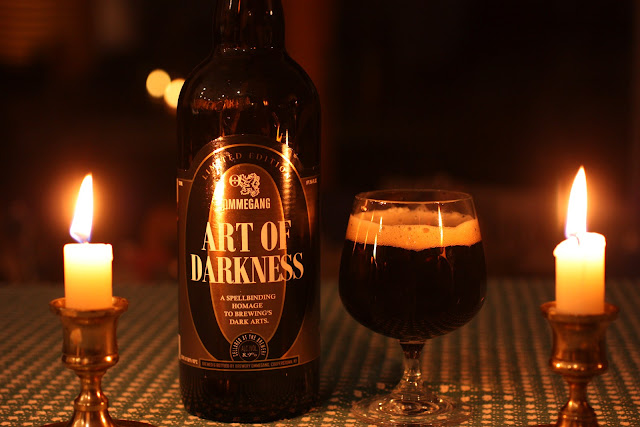
Great beers to look for in this style are New Belgium’s 1554, Ommegang’s Art of Darkness, Dogfish Head’s Raison D’Extra, Avery’s The Reverend and Great Divide’s Grand Cru. Seriously, you’re going to love spending autumn in Belgium.

Hopefully, you see that you don’t have to spend the fall in pumpkin and Oktoberfest lager territory… not that there’s anything wrong with that. Options people… you have them. Variety is the spice of like. Beers, beers everywhere… pour yourself a drink. If ifs and buts were candy and nuts… what was I talking about?

Here’s to craft-brewed happiness… Cheers!

Saturday, September 6, 2014

So You Want to Brew a Pumpkin Ale

Not exactly how it works
They are everywhere, from the grocery store shelves to the taps in your favorite local brewery’s tap room. Everyone’s got pumpkin beer on the brain! I’m sure by now, you've began scouring your community, looking for as many different pumpkin ales as you can get your hands on. You may have even decided you’re going to try your hand at making your own. After all, a wiser fella than myself once said, “there is no nobler cause in life than to make your own beer.”

… and 90% of all internet quotes are completely made up. Just like internet statistics.

Anywho, if brewing your very own pumpkin beer for the holiday season is on your list of things to do, I've got a few suggestions for you. Obviously, these thoughts are my own and not intended to represent any kind of sanctioned industry standards. They are also intended for those home brewers who have graduated to all grain brewing. If you’re an extract or a partial mash guy, read on for general situational awareness… but obviously, these ideas will have to be modified before being applicable for your use.

See them standing, in a row...

The first thing you must decide is whether you will use real pumpkins or not. Many if not most pumpkin ales are not made with real pumpkins – they use canned pumpkin like you would find at your grocery store. Of course, I've also seen it done where pumpkin ales are made with just pumpkin spices… but that sort of thing is generally regarded as loserish.

Soon, you will all be turned into
delicious pumpkin beer...
The reason why many brewers don’t use real pumpkins is because it’s not worth it. Pumpkins are quite irritating to work with, and don’t make or break the beer. First of all, they have to be in season. Not to mention that you have to roast the pumpkins in order to get anything out of them, and then, they gum up the mash and make sparging a mess when you are mashing them in. Everything you need from a pumpkin in order to make pumpkin ale can be gained from canned pumpkin. Plus, since canned pumpkin is concentrated, you need less of it than you would real pumpkins. But hey, it’s your show.

The correct way to add pumpkin is to mash it. Some people pre-boil the canned pumpkin before mashing, but that’s not necessary. Add the pumpkin to the rest of your grain in the mash tun and mash for full time. The color of your eventual beer will not come from the pumpkin… it will come from the barley, so design your base malt accordingly. I recommend a pale ale or amber lager for a typical pumpkin ale recipe… something in the pale to amber/red range. If you’re brewing a pumpkin porter or pumpkin saison (I just saw one of those the other day… really interesting), you’ll obviously need to adjust your grain bill accordingly.

You’re going to have to rake the top of your grain bed when you start sparging because the pumpkin will form a gelatinous layer on top that the sparge water cannot penetrate. Also, pumpkin gets extremely sticky throughout and is a pain to run off. Adding rice hulls will help a little bit, but you should expect 2-3 times as much time to lauter. I warned you pumpkin can be a pain in the butt.

You can also add pumpkin to the boil instead of the mush tun which is much easier – but you’ll miss out on some of the flavor, body and fermentables you would've gotten by mashing it.

Deliciousness
Once you have successfully lautered out the necessary volume of wort, the rest is pretty straight forward. Hop additions should be early and modest, aiming for a lower bitterness of below 20 IBU, just enough to balance the sweetness from the malt. Mt Hood and Hallertau hops are good varieties to use. You are not hopping for flavor or aroma as those departments will be addressed later.

Towards the end of your boil, like in the 5 minute range or so, you’re going to add spices. This is where the bulk of your flavor and aroma will come from, which is why you add it so late. The spices you add will vary depending on what exactly you are going for, but typically, they are some combination of cinnamon, nutmeg, ginger, allspice and cloves. The total amount of spices for a 5 gallon batch should be around .5 oz (as in not very much). It’s important not to over spice or you’ll be left with a perfumy disaster. You could also put your spices into the fermenter, sort of like dry-hopping them.

If you want to get fancy, or you are trying to clone Southern Tier’s Pumking, throw some vanilla beans into the boil to simulate the whip cream dollop on your pumpkin pie.

The yeast is up to you as well, depending on what you want your finished product to be. If you want your beer to be clear and crisp, use a German lager yeast and ferment cold. If you want more body and a bolder flavor profile, American ale yeast is the way to go.

A typical 7-10 day primary/secondary fermentation followed by 2-3 weeks of conditioning will be sufficient to finish this beer off. Expect the total soup to nuts to be 5 weeks or so.

Everybody loves the great pumpkin!

After that, there’s nothing left to do but give your beer a name and enjoy on a cool autumn evening with friends. Everyone loves pumpkin ales, and if you make one, everyone will love you too. Now this blog is giving out life lessons. Free of charge.

Here’s to craft-brewed happiness… Cheers!